
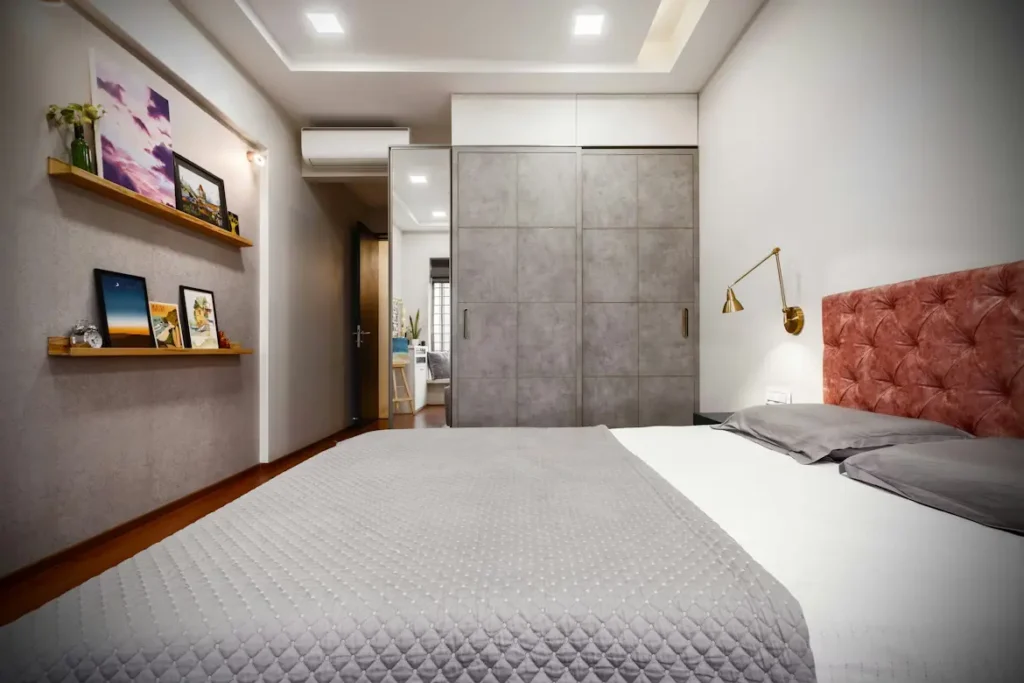

Introduction: Small Bedroom Storage Ideas
Most storage advice for small bedrooms assumes you have a closet. Or a budget. Or at least a second wall that isn’t already covered by a window.
If you’ve ever stood in your tiny bedroom thinking where does any of this even go, you’re not alone. I’ve lived in rooms where the bed took up so much floor space that opening the closet door fully was genuinely not an option. I’ve stacked things under the bed only to have them slide around and never find them again. I’ve bought “storage furniture” that somehow created more chaos than it solved.
This guide is what I wish someone had handed me back then — honest, practical, and built for rooms where square footage is genuinely limited. I’m Emily Carter, and I’ve decorated and reorganized five different spaces over the past seven years, from a 90-square-foot rental to my current Nashville home. These 18 ideas are the ones that actually made a difference.
Let’s make your small bedroom work harder.
Why Small Bedroom Storage Fails (And What to Do Differently)
Before we jump into solutions, it helps to understand why most small bedroom storage attempts fall apart. The problem isn’t usually lack of ideas — it’s lack of strategy.
Most people approach small bedroom storage by adding things: a new bin here, a new shelf there. But in a small room, adding furniture without a plan just creates visual noise that makes the space feel more cramped, not less. The real goal is to hide what you don’t need daily, organize what you do, and reclaim the spaces you’re probably not using at all.
The Three Zones You’re Probably Ignoring
In nearly every small bedroom I’ve organized, there are three zones that go almost completely to waste:
1. Vertical space above eye level — Most people stop using wall space at about 5 feet. Everything above that? Empty. In a small room, that’s prime real estate.
2. The space under the bed — Not just for shoving things randomly. Done right, under-bed storage can hold an entire off-season wardrobe.
3. The back of every door — Doors are free storage. The back of a bedroom door, a closet door, or even a wardrobe door can hold dozens of items with zero floor space used.
Once you start thinking in these three zones, the storage math in a small bedroom changes dramatically.
If you’re also working with a rental, you’ll find a lot of overlap here with the approaches covered in how to make a rental apartment feel like home — most of these bedroom ideas are fully renter-safe with no drilling required.
Under-Bed Storage: The Most Underused Space in Any Small Bedroom
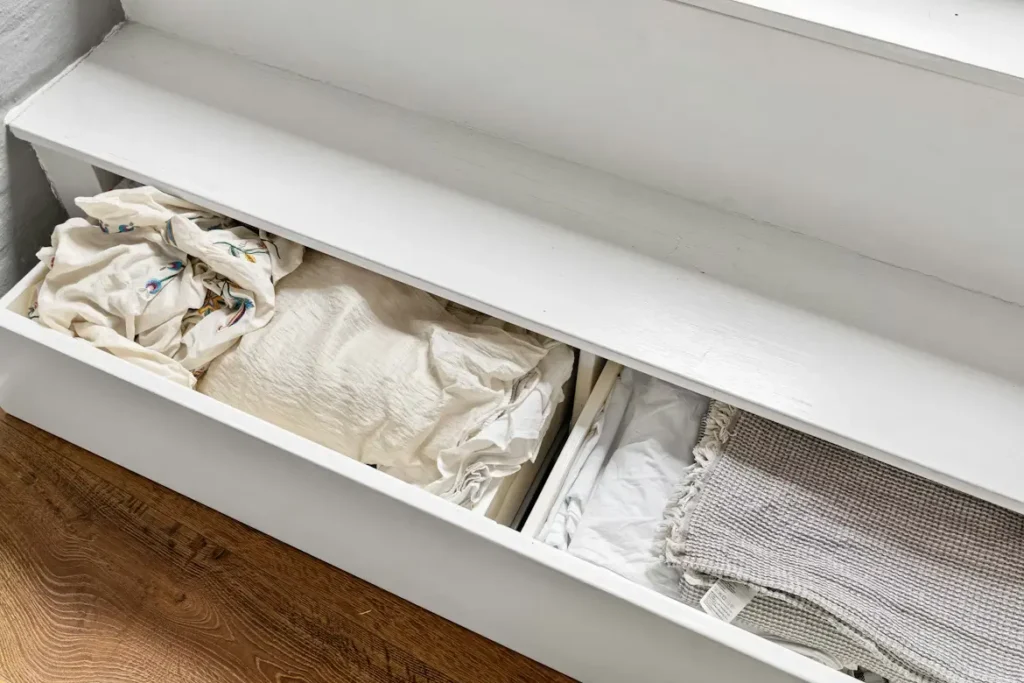
Let’s start here because this is consistently the biggest missed opportunity. The average bed sits about 12 to 14 inches off the ground. Depending on your mattress height, that’s potentially 20 to 30 cubic feet of storage space just… sitting there.
Low-Profile Storage Bins and Boxes
Flat, rolling storage bins are the simplest entry point. Look for ones that are no more than 6 inches tall so they slide in and out without catching on the bed frame. Clear bins are better than opaque ones — you’ll actually remember what’s in them.
The key is what you store there. Under the bed is ideal for:
- Off-season clothing (summer clothes in winter, and vice versa)
- Extra bedding and blankets
- Shoes you wear infrequently
- Spare pillows or cushions
It is not ideal for things you need daily access to. Digging under a bed every morning is a fast way to give up on the system entirely.
Vacuum Storage Bags for Bulky Items
Bulky duvets, thick sweaters, and winter coats take up enormous amounts of closet space. Vacuum storage bags compress these down to a fraction of their normal size and slide under a bed easily. I use these every single spring and fall — it genuinely doubles my storage capacity.
One honest note: don’t vacuum-seal anything that creases badly, like dress shirts or structured blazers. Those wrinkles don’t come out without serious effort.
Bed Risers to Create More Clearance
If your current bed frame sits too low, bed risers (small platforms that go under each leg) can lift the bed an additional 4 to 6 inches. This might seem minor but it can transform what fits underneath. Risers typically cost under $20 and don’t require any tools.
The tradeoff: a higher bed can look slightly awkward in a very small room. If aesthetics matter to you, look for wooden risers that mimic furniture legs — they look intentional rather than improvised.
Vertical Storage: Think Up, Not Out
In a small bedroom, horizontal floor space is precious and limited. Vertical wall space is almost always abundant and almost always ignored. Shifting your thinking from “where can I put this on the floor” to “how high can I get this off the floor” is genuinely one of the most effective storage mindset shifts you can make.
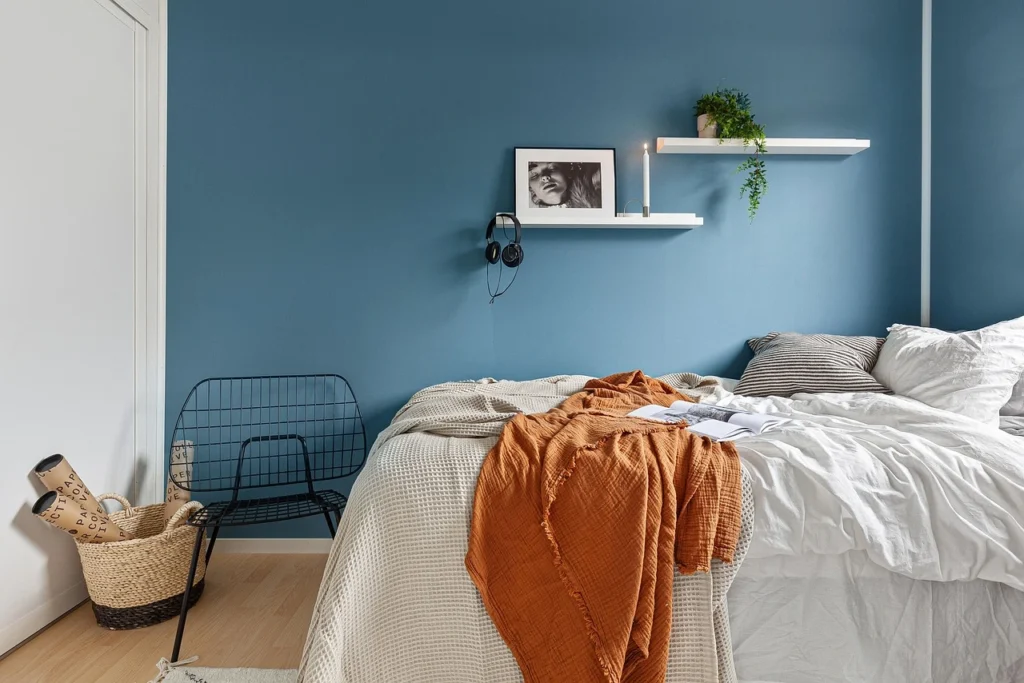
Floating Shelves (The Renter-Friendly Version)
Floating shelves are one of the most versatile tools in a small bedroom. They hold books, plants, alarm clocks, candles, folded items — almost anything. And in a rental, you can install them with proper wall anchors, patch the holes when you leave, and be well within what most leases allow.
The placement matters more than most people think. Install shelves high enough that they don’t feel like they’re closing in on the room — I typically recommend starting at about 7 feet high for display shelving and using lower shelves only if they’re functional and organized.
One tip I’ve learned from experience: use deep shelves (at least 10 inches) if you want to store folded clothing on them. Anything shallower works for books and decor but won’t hold a neatly folded stack of jeans.
Tall Dressers Over Wide Ones
If you’re in the market for a new dresser, go tall rather than wide. A 6-drawer tall dresser has roughly the same storage capacity as a wide 4-drawer dresser but takes up significantly less floor space. In a room where every square foot matters, that difference translates directly into more room to move.
The same principle applies to bookcases, wardrobes, and any other freestanding furniture — taller and narrower is almost always better in a small room than wide and short.
Over-the-Door Organizers
Over-the-door storage is one of the most underrated small bedroom hacks I know. A good over-the-door organizer on the back of your bedroom door can hold shoes, accessories, toiletries, bags — and it uses zero floor space and requires zero drilling.
Look for organizers with clear pockets so you can see what’s stored without pulling everything out. If the organizer has metal hooks that scratch a painted door, add a small felt pad between the hook and the door frame.
This idea pairs really well with the approaches in how to make a bedroom feel cozy — keeping visual clutter off surfaces is one of the fastest ways to make a small room feel more calm and intentional.
Multi-Functional Furniture: Every Piece Should Pull Double Duty
In a small bedroom, furniture that serves only one purpose is furniture you probably can’t afford — at least not in terms of space. The smartest approach is to replace single-purpose pieces with multi-functional alternatives that look just as good but work twice as hard.
Storage Ottomans and Benches
A storage ottoman at the foot of the bed is one of those ideas that seems almost too obvious, but it genuinely works. A well-chosen ottoman adds seating, acts as a surface for folding laundry or setting out tomorrow’s outfit, and hides extra blankets or pillows inside.
The best ones look like they were chosen purely for style. The worst ones look like storage boxes with legs. Spend a bit more here if you can — a linen-upholstered storage bench in a neutral color will last years and never look out of place.
Nightstands With Drawers or Shelves
The average nightstand is a flat surface and maybe a single shelf. That’s not enough. Swap yours for a nightstand with two or three drawers and you gain significant storage for books, charging cables, small accessories, and the random collection of items that somehow always ends up on a bedside table.
Alternatively, a small three-drawer chest can function beautifully as a nightstand. It’s slightly larger, but the storage you gain from three full drawers is worth it in almost every case.
Storage Beds
If you’re furnishing from scratch or planning a larger upgrade, a storage bed — one with built-in drawers under the mattress — is the single highest-impact purchase you can make for a small bedroom. The drawers in a well-made storage bed hold as much as a full dresser.
The honest caveat: quality varies enormously. Cheap storage beds have shallow, flimsy drawers that stick. If you’re investing in one, read reviews specifically about drawer quality and how well the hardware holds up over time.
Closet Organization: Maximizing What You Already Have
Even if your closet is small, most people are using only a fraction of its actual capacity. Before adding anything new to your bedroom, it’s worth spending an hour rethinking what’s already in the closet.
Double Hang Rod
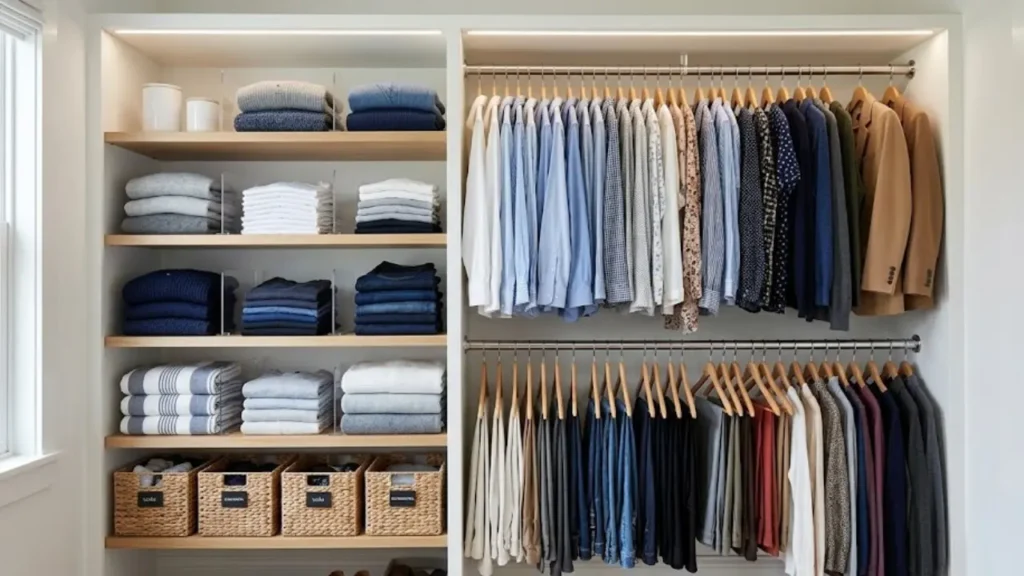
Most closets come with a single hanging rod at one height. Unless you’re storing a lot of full-length dresses or long coats, that’s probably wasted vertical space. Adding a second hanging rod below the existing one can effectively double your hanging capacity.
This is especially useful for shirts, jackets, and folded trousers. The top rod holds one category, the bottom rod holds another, and you’ve just doubled the closet’s output with a $10 rod and two brackets.
Shelf Dividers for Folded Items
If your closet has shelving, shelf dividers are one of the simplest investments you can make. They keep folded stacks of sweaters and jeans from toppling sideways and turning into a pile. Acrylic dividers are particularly useful because they’re nearly invisible — the shelves look clean and organized without feeling cluttered.
Door-Mounted Shoe Organizers Inside the Closet
The inside of a closet door is almost always bare. Mount a fabric or clear-pocket shoe organizer inside the door and you’ve added storage for 12 to 24 pairs of shoes without touching any floor space. These also work brilliantly for accessories, scarves, folded t-shirts, or anything that fits in a pocket.
For more on how to style a bedroom on a tight budget without compromising on how it looks, check out the ideas in how to decorate a bedroom with white walls on a budget — a lot of those principles about choosing intentional pieces apply directly here.
Wall-Mounted and Built-In Solutions
Once you’ve maximized furniture and closet space, the next frontier is the walls themselves. In a small bedroom, walls are essentially free storage waiting to be used.
Pegboards for Accessories and Jewelry
A pegboard mounted on the wall above a dresser or vanity area turns a bare wall into a fully customizable storage system. Hooks, small shelves, and bins can be repositioned any time. Use it to hang bags, jewelry, hats, belts, or anything else that usually ends up in a drawer.
The visual upside: a well-organized pegboard looks like intentional decor, not clutter. Keep the colors cohesive — a white pegboard with matching white accessories reads as a design feature, not a storage hack.
Floating Corner Shelves
Corners are another underused zone in small bedrooms. Corner shelves — either floating or as a small corner unit — fit into the awkward triangular space that’s usually wasted and can hold plants, books, candles, or small storage baskets.
I have three floating corner shelves in my own bedroom, and they’ve become some of the most useful surfaces in the room. The trick is keeping them curated — two or three items max per shelf rather than cramming them with stuff.
Headboard With Built-In Storage
A headboard with built-in shelves or cubbies replaces two separate items (headboard + nightstand) with one while adding storage. These are particularly useful for people who read in bed — you get a dedicated place for the book, the reading lamp, the water glass, and whatever else migrates to the bedside.
Smart Organization Habits That Make Storage Work Long-Term
New storage solutions only work if the habits around them hold up. In my experience, the biggest reason bedroom organization falls apart within a month is not the wrong products — it’s the lack of a simple system for maintaining it.
The “One In, One Out” Rule
Every time something new enters the bedroom — a new item of clothing, a new book, a new decorative object — something old leaves. This rule sounds simple but it’s genuinely the most effective long-term decluttering habit I’ve found. It prevents the slow accumulation of stuff that eventually overwhelms even a well-organized room.
Weekly 10-Minute Reset
Set a timer for 10 minutes once a week and return everything in the bedroom to its designated place. Surfaces get cleared, the floor gets a sweep, any items that drifted in from other rooms go back out. Ten minutes is fast enough that it doesn’t feel like a chore and consistent enough to prevent buildup.
Seasonal Declutter Twice a Year
Twice a year — I do this in March and October — do a full bedroom audit. Go through the clothes under the bed, the shelves, the closet. Anything you haven’t touched in six months is almost certainly something you don’t need. Donate, sell, or discard.
This is also when I rotate seasonal bedding. And on the topic of bedding — quality bedding that compresses well and stores flat is a genuine advantage in a small bedroom. Cheap, overstuffed duvets are a nightmare to store. If you’re looking for organic bedding that actually folds down flat and breathes well year-round, Sleep & Beyond makes organic sheets and covers worth considering — their organic cotton options are lightweight enough to store efficiently while still feeling genuinely luxurious on the bed.
(Disclosure: This post contains affiliate links. If you purchase through them, I may earn a small commission at no extra cost to you.)
Pro Tips Designers Actually Use in Small Bedrooms
Here’s the stuff that doesn’t make it into most beginner guides but that makes a real difference in how a small bedroom feels and functions.
Use matching storage containers. Mismatched bins and boxes create visual chaos even when technically organized. Switching everything to the same bin style — even inexpensive ones from a dollar store — makes a room feel dramatically more ordered.
Store things where you use them. This sounds obvious but most people violate it constantly. If you get dressed near the closet, store shoes near the closet. If you read in bed, store books at the bedside. Storage that requires you to walk across the room will be abandoned within weeks.
Treat the top of the dresser as a display surface, not a dumping ground. If items live on the top of the dresser, they should be chosen deliberately — a tray, a candle, a plant. Everything else should be inside the dresser. The moment the top of the dresser becomes a surface where things just land, the room starts to feel chaotic.
Use baskets and bins inside shelves. Open shelving is beautiful in theory but quickly becomes a mess in practice. Using baskets or bins inside shelves corrals smaller items and gives the shelf a much cleaner look while still keeping things accessible.
Don’t overcrowd nightstands. Nightstands with too many items make the entire bedroom feel smaller. Keep it to: lamp, book or phone, water glass. Everything else goes in a drawer.
Common Mistakes to Avoid in Small Bedroom Storage
Even with the best intentions, these are the missteps that most frequently derail small bedroom organization projects.
Buying storage before decluttering. This is the most common mistake I see. People purchase storage bins, baskets, and organizers before going through their stuff — and then find they’re organizing things they don’t actually need. Always declutter first, then buy storage for what remains.
Choosing furniture that’s too big. A king-size bed in a small bedroom is not aspirational — it’s impractical. Scale furniture to the room. A full or queen bed in a small room leaves space for other pieces that improve function. A king bed that barely fits doesn’t.
Ignoring the vertical dimension. If your walls above the furniture are bare, you’re leaving storage on the table. This is especially important for renters who feel limited in what they can do — floating shelves with proper anchors, over-door organizers, and tall furniture all use vertical space without requiring renovations.
Creating storage with no system. A shelf with stuff piled on it is not storage — it’s just a raised pile. Every item needs a designated spot and ideally a container that defines its boundaries. Without that, organized spaces devolve into chaos within weeks.
Treating under-bed storage as a catch-all. Random items thrown under a bed with no containers or organization become inaccessible and forgotten. Use bins, label them, and reserve the space for specific categories of items.
Putting It All Together: A Small Bedroom Storage Ideas
If you’re starting from scratch or doing a full bedroom overhaul, here’s the sequence that works best:
Step 1 — Declutter first. Before touching a single storage solution, go through everything in the room. Be ruthless. If you haven’t used it in six months, question whether it needs to stay.
Step 2 — Audit your existing storage. What do you actually have? Is the closet organized? Is under-bed space being used? Are there vertical walls going to waste? Get clear on what’s already available before buying anything new.
Step 3 — Address the big three zones. Under-bed (add bins or risers if needed), vertical walls (floating shelves or over-door organizers), closet interior (double hang rod, shelf dividers). These three changes alone make an enormous difference.
Step 4 — Upgrade furniture strategically. If you need new pieces, prioritize multi-function. A storage ottoman over a plain bench. A dresser-nightstand over a flat surface. A storage bed over a standard frame if budget allows.
Step 5 — Establish maintenance habits. None of this lasts without the weekly reset and the seasonal audit. Build both into your routine before the next month ends.
The bedroom ideas that work well here also apply beautifully in other small spaces — if you’re interested in how these principles translate to a rental living room, the approaches in living room color ideas for rental apartments cover a lot of the same ground from a different angle.
The Bottom Line on Small Bedroom Storage Ideas
A small bedroom doesn’t have to feel cramped, cluttered, or compromise. It requires a different kind of thinking — less “where do I put this” and more “how do I use every inch intelligently.”
The ideas in this guide aren’t complicated. They don’t require a renovation budget or a complete furniture overhaul. Start with one zone — under the bed, the back of the door, or the empty wall above your dresser — and build from there. Small wins compound fast in a small room.
You already have more storage potential than you think. It’s just waiting to be unlocked.
FAQ: Small Bedroom Organization Ideas
How do I add storage to a small bedroom with no closet?
Focus on vertical wall space and multi-functional furniture. Install floating shelves high on the walls, use a tall wardrobe or armoire as a closet substitute, and add an over-the-door organizer for shoes and accessories. Under-bed storage bins can hold an entire off-season wardrobe. A storage ottoman at the foot of the bed handles extra bedding without needing any floor-mounted furniture.
What is the best type of storage furniture for a small bedroom?
Multi-functional pieces win every time. A tall dresser (6 drawers, narrow footprint) beats a wide low dresser for space efficiency. A nightstand with drawers replaces both a side table and extra storage. If you’re furnishing from scratch, a storage bed with built-in drawers is the single highest-impact purchase you can make in a small bedroom.
How do I organize under my bed for maximum storage?
First, measure your under-bed clearance height, then buy flat bins that fit with an inch to spare. Use clear bins so you can see what’s inside without pulling everything out. Label each bin by category — winter clothes, spare bedding, shoes — and stick to that system. If your bed sits too low, bed risers add 4 to 6 inches of clearance for about $15 to $20.
What are the best small bedroom storage ideas for renters?
Renter-safe options include: over-the-door organizers (no drilling), freestanding shelving units, tall wardrobes, under-bed bins, and storage ottomans. Floating shelves can also work in rentals — use proper anchors, fill the holes when you leave, and most leases allow it. Avoid permanent built-ins or modifications that can’t be undone.
How do I keep a small bedroom organized long-term?
Three habits matter most. First, the “one in, one out” rule — when something new comes in, something old goes out. Second, a 10-minute weekly reset where everything returns to its designated spot. Third, a twice-yearly seasonal audit to declutter anything unused. Storage systems only work long-term if the habits around them are maintained consistently.



Pingback: Before and After Small Space Changes | 6 Ideas That Work
Pingback: How to Arrange Furniture in a Small Bedroom: 9 Smart Ways
Pingback: 12 Small Bedroom Color Ideas That Make a Room Feel Bigger
Pingback: 13 Small Bedroom Closet Organization Ideas That Actually Work
Pingback: How to Make a Small Apartment Feel Bigger: 18 Proven Ways