
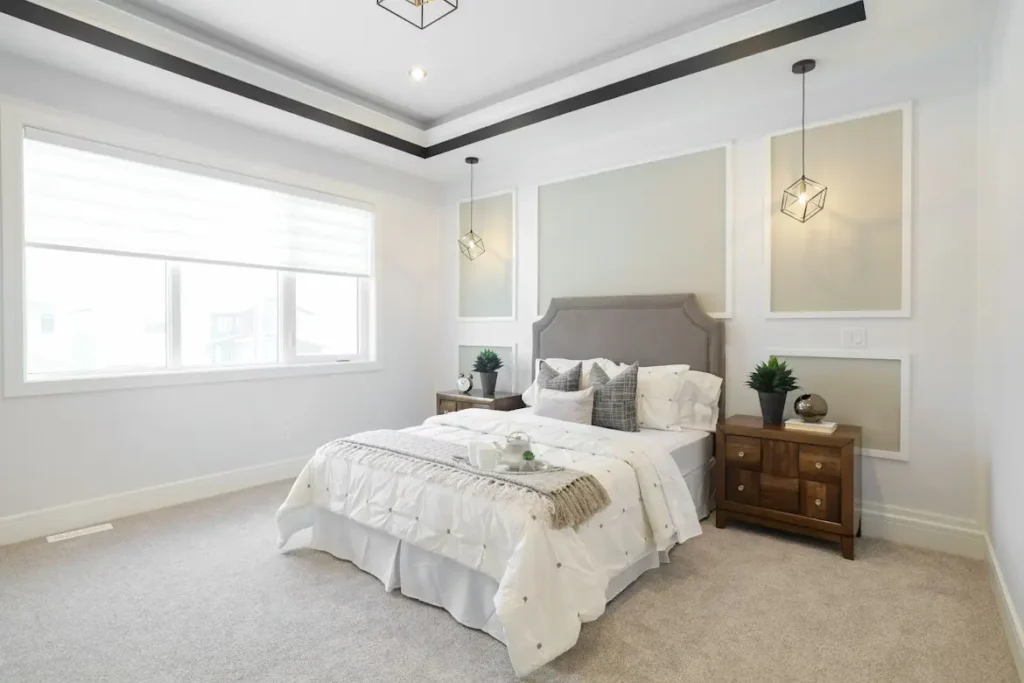

If you’re trying to decorate a bedroom with white walls on a budget, the biggest mistake is thinking white is “empty.” It’s not. White walls are one of the most powerful design tools you have—if you know how to use them.
There is a moment most renters and budget decorators know well. You stand in your bedroom, staring at four blank white walls, feeling that mix of possibility and frustration. The space could be anything. Right now, it feels like nothing. And your budget is tight.
I’ve been there. Three apartments in six years, all with the same flat white paint and the same challenge: make it feel like home without overspending, damaging walls or breaking lease rules—especially if you’re renting and trying to follow practical strategies like those in this guide on how to make a rental apartment feel like home.
What I learned is simple but not obvious: white walls don’t make a room look unfinished—lack of intention does. When used correctly, white walls amplify everything you place in the room. They make textures richer, colors sharper and small design decisions more noticeable.
This guide breaks down exactly how to decorate a bedroom with white walls step by step, using real examples, budget-friendly ideas, and practical strategies that actually work.
Quick Ideas to Decorate a Bedroom With White Walls
If you want fast results without overthinking, start here:
- Use textured bedding like cotton, linen, or chunky knit throws to add warmth
- Stick to 2–3 accent colors and repeat them across the room
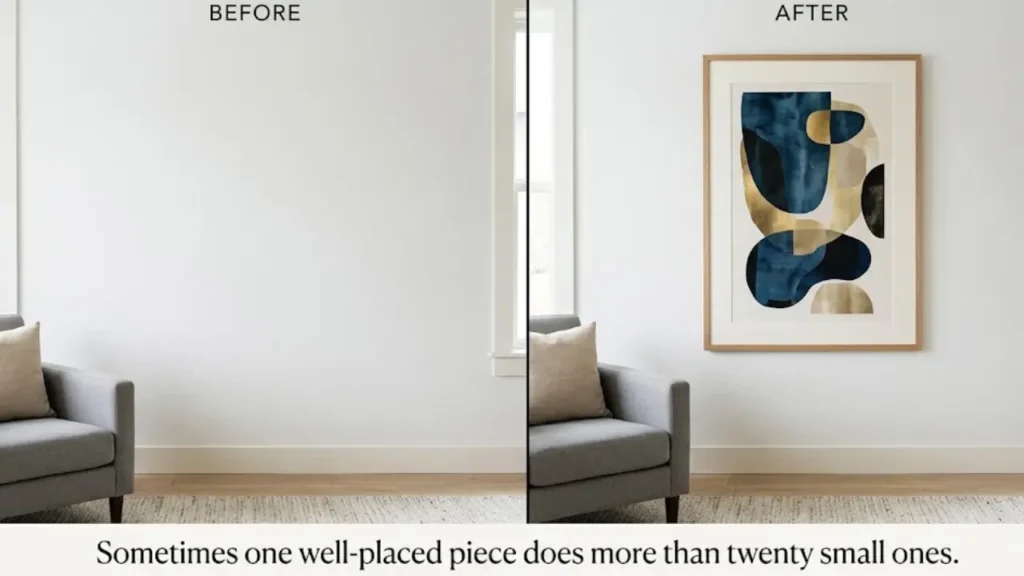
- Add one large statement wall art piece instead of many small ones
- Use warm lighting (2700K–3000K) instead of harsh white lights
- Place a plant or mirror to create depth and contrast
- Choose furniture with some contrast (avoid all-white or overly pale setups)
These small changes alone can make a white-walled bedroom feel intentional, cozy, and designer-level—without spending much.
Why It’s Hard to Decorate a Bedroom With White Walls (And How to Fix It)
Here is the thing nobody tells you: decorating a room with colored walls is actually easier than decorating a white one. Color does a lot of the heavy lifting for you. It sets a mood, creates a focal point, and masks mismatched furniture. White walls strip all of that away and expose every decision you make.
This is why so many white-walled bedrooms end up feeling clinical or half-finished. It is not the color’s fault. It is that the decorator treated white as a neutral backdrop rather than an active design element.
White is not the absence of color. It is a demand for intention.
Interior designers who work with white rooms obsessively will tell you the first thing they think about is not what goes on the walls, but what happens in front of them. The wall becomes a stage. Everything you place against it, hang on it, or stack near it becomes amplified.
I learned this the hard way with a secondhand bookshelf I painted the same white as my walls. My thinking was that it would “disappear” and make the room look larger. What actually happened was that it looked like I had forgotten to decorate that entire corner. The shelf disappeared, but so did any sense of layering or depth.
The fix was painting the back of the shelves a deep navy. Suddenly the books stood out, the shelf had presence, and that corner became a focal point. Total cost: one small sample pot of paint, around four dollars.
The same principle applies across your entire home. If you are also dealing with a living room that feels flat or lacks personality, the ideas in this piece on living room color ideas for rental apartments translate surprisingly well to bedroom spaces too, especially the section on building warmth without painting.
The Texture Strategy: How to Decorate a Bedroom With White Walls Without Spending Much
If there is one principle worth memorizing, it is this: in a white room, texture creates warmth. Color contrast creates energy. You need both, but texture is where most budget decorators underinvest.
Walk into any bedroom that feels expensive without being loud, and you will notice the surfaces are doing a lot of quiet work. There is a chunky knit throw on the bed. A jute rug on the floor. Linen curtains that pool slightly at the bottom. A weathered wood nightstand. None of these items are particularly expensive individually, but together they create what designers call “tactile richness.”
What I Actually Tested
Over the course of about four months, I deliberately swapped out items in my bedroom to measure the difference texture made against a white wall backdrop. Here is what I found:
- Replacing a flat polyester comforter with a waffle-weave cotton one (thrifted for 18 dollars) made the bed look significantly more styled without changing anything else in the room.
- Adding a woven jute rug under the bed transformed the floor from “empty white room” to “intentional space” almost overnight.
- Swapping out my single white ceiling light for a rattan pendant from a discount store (around 35 dollars) changed the entire mood of the room after dark.
- Hanging a macrame wall piece I made from a 12-dollar rope kit anchored the wall above my desk and added the one element that most visitors commented on.
None of these changes required paint, permission from a landlord, or significant financial investment. What they required was understanding that a white room needs its furniture and soft furnishings to carry all the visual interest.
Pro Tip: When shopping secondhand for texture-heavy pieces like throws and rugs, look for natural fibers like cotton, linen, wool, and jute. These age better, feel more expensive, and photograph better than their synthetic equivalents.
Texture Comparison by Budget Level
| Item | Budget Option | Cost | Impact Level |
| Throw Blanket | Thrifted chunky knit | $8-25 | High |
| Area Rug | IKEA flatweave / jute | $30-80 | Very High |
| Curtains | IKEA linen panels | $20-40/pair | High |
| Lighting | Rattan pendant shade | $25-50 | Very High |
| Wall Texture | DIY macrame or tapestry | $10-20 | Medium-High |
| Pillows | Mix of fabrics, thrifted | $5-15 each | Medium |
Best Color Ideas for a Bedroom With White Walls
One of the persistent myths about decorating a bedroom with white walls is that you have to either commit to painting or live with stark minimalism. Neither is true. The third path, which is the one that actually works best on a tight budget, is building a deliberate accent color system through your accessories.
This sounds more complicated than it is. In practice, it means picking two or three colors that you repeat throughout the room in different scales. One dominant accent color (say, terracotta), one supporting color (warm cream or tan), and one surprise color used sparingly (maybe a dusty sage green in one or two small items).
The white walls then act like the spaces between words on a page: they give your colors room to breathe and be noticed.
A Real Case Study: The 150-Dollar Bedroom Transformation
A friend of mine moved into a new apartment and had roughly 150 dollars to make her bedroom feel livable. She had a white bed frame, white walls, and a secondhand dresser in a forgettable beige-brown.
We built her color scheme around forest green and warm rust, both of which work beautifully against white because they pull warmth into the room without overwhelming the light.
- Two forest green pillow covers from a discount home store: 14 dollars
- A rust-colored throw from a thrift store: 8 dollars
- Green trailing pothos plant from a local nursery: 6 dollars
- Rust and cream abstract print from an Etsy digital download, printed at a local print shop: 11 dollars
- One can of forest green chalk paint for the dresser: 12 dollars
- Secondhand woven rattan mirror: 22 dollars
- String lights for above the headboard: 9 dollars
Total spent: 82 dollars. The remaining 68 went toward a proper rug pad, since the rug itself was a gift. The room went from feeling like a temporary space to feeling genuinely hers. The white walls, rather than being a problem, became the reason the green and rust colors popped so effectively.
The best budget decorating trick is restraint: two accent colors, used consistently, beat ten colors used randomly every single time.
Picking colors that work together is genuinely one of the harder parts of this process. A lot of people get it wrong not because of taste, but because they are guessing instead of using a framework. The same color pairing logic that works for a living room sofa situation, like this breakdown of what color rug goes with a grey couch, applies directly to bedroom accent decisions. If you can choose a rug for a sofa, you can choose a throw for a bed frame.
Wall Decor Ideas for a Bedroom With White Walls on a Real Budget: What Actually Works
This is where a lot of people either overspend or give up entirely. Original art feels out of reach. Prints from big box stores feel generic. And sticking posters on a white wall with blue painter’s tape (which I definitely did in my first apartment) rarely looks as casual-chic as it does on Instagram.
After experimenting with probably a dozen different wall decor approaches, here is what I have found actually works:
Gallery Walls Done Right
The gallery wall has been proclaimed dead by trend forecasters approximately six times in the past decade. It keeps surviving because when done well, it genuinely works in a white-walled room. The key is in the planning, not the purchasing.
Before buying a single frame, tape out your gallery arrangement on the wall using paper templates. Live with it for a day. Rearrange. Then commit. This costs nothing and saves you from the patchwork of unnecessary nail holes that ruins walls and leases.
For frames themselves, the secondhand market is underrated. I once found eleven matching black frames at a thrift store for a total of seven dollars. Spray painted them all the same matte black and they looked completely intentional.
The Single Statement Piece Strategy
If gallery walls feel like too much work, the opposite approach works equally well: one large piece of art hung confidently on a wall that has nothing else competing with it. The piece needs to be large enough to command the space (generally at least 24 by 30 inches for a standard bedroom wall) and hung at the correct height (center of the art at approximately eye level, which is around 57 to 60 inches from the floor).
Oversized prints from digital download sites like Etsy or Creative Market cost between 3 and 15 dollars and can be printed at most office supply or print shops for a fraction of what a framed print would cost at a home goods store. I have had excellent results with poster-size prints on cardstock mounted in simple frames.
Unexpected Wall Decor That Punches Above Its Weight
- Vintage plates from thrift stores arranged in a cluster (cost: under a dollar each)
- A large dried pampas grass or eucalyptus bundle hung on the wall with a simple nail
- Washi tape geometric patterns for renters who cannot paint
- A long floating shelf with styled objects: books, a plant, a candle, a small sculpture
- Fabric panels: stretch a yard of interesting fabric over a canvas frame or simply pin it as a soft wall hanging
Lighting: The Most Underrated Tool for Decorating a White-Walled Bedroom
Ask most people what they would buy to make their bedroom feel cozier and they will say rugs, throw pillows, maybe a plant. Almost nobody says lighting, and this is a significant mistake.
White walls reflect light more intensely than any other surface. This means that the quality and color temperature of your light sources has an outsized impact on how your room feels. Overhead fluorescent or cool LED light makes white walls feel cold, institutional, almost interrogation-room level uncomfortable. Warm-toned light (2700K to 3000K) on the same white walls creates a completely different atmosphere: soft, enveloping, hotel-quality.
The Three-Light Rule
Rather than relying on a single overhead fixture, aim for at least three light sources at different heights in your bedroom. This is a trick borrowed from commercial interior designers and it completely changes how a room reads:
- Ambient light: The overhead fixture or a floor lamp that illuminates the general space
- Task light: A bedside lamp or reading light for functional use
- Accent light: String lights, a small table lamp on a dresser, or an LED strip behind a headboard
This layered approach creates depth and removes the flat, shadowless quality that makes white-walled rooms look like photographs taken with a flash.
Budget approach: String lights cost eight to fifteen dollars and do extraordinary work. Secondhand table lamps can be found for a few dollars and given new life with a shade swap. IKEA’s basic lamp range is reliably inexpensive and pairs well with aftermarket shades.
For authoritative guidance on lighting color temperatures and their effects on space perception, the Illuminating Engineering Society (IES) publishes freely accessible standards at ies.org that are genuinely worth reading if you want to go deep on this topic.
Plants, Mirrors, and the Art of the Intentional Corner
No budget bedroom guide is complete without plants and mirrors, but most of the advice you find on these two subjects is so generic it is practically useless. “Add a plant for life.” “Use mirrors to make a room look bigger.” These statements are true in the same way that “eat vegetables” is good advice: technically correct, unhelpfully vague.
Plants: What Actually Works in a Bedroom
Not all plants make sense in a bedroom, and placing the wrong one in the wrong spot does nothing for the space. Here is what I found actually works against white walls:
- Trailing plants (pothos, string of pearls, devil’s ivy) on high shelves create downward movement that pulls the eye through the room
- Large-leaf plants (monstera, fiddle-leaf fig, bird of paradise) in corners create organic focal points that no piece of furniture can replicate
- Small plants on nightstands or dressers add life without taking up significant space
The visual principle at work is that plants against white walls benefit from the backdrop in the same way art does. The white surface makes the green more vivid and the organic shapes more dramatic.
For the genuinely budget-conscious: pothos propagates freely and is almost indestructible. Take a cutting from a friend’s plant, put it in water until it roots, then plant it. Cost: zero dollars. Impact: significant.
Mirrors: Beyond “They Make a Room Look Bigger”
A mirror does make a room look larger, but the more interesting function it serves is bouncing light around a white-walled room in a way that creates depth and movement. A single large mirror on a wall opposite a window does not just reflect the outdoors. It creates a visual rhythm that makes the room feel alive.
The mistake most people make is hanging a small mirror as if it were wall art, centered on a wall at eye level with nothing else around it. This rarely works. A mirror needs either scale (large enough to act as a statement) or context (placed as part of a styled vignette on a dresser, for example, leaning rather than hung).
The strategic use of mirrors is not limited to bedrooms either. If you are working on other areas of your home, there is a really practical breakdown of how to use mirrors to make a small living room look bigger that covers placement angles and sizing in ways that apply directly to a bedroom setting too.
The Intentional Corner
Every bedroom has at least one corner that tends to become a dead zone: the far corner past the dresser, the space beside the wardrobe, the gap between the window and the wall. In white-walled rooms, these dead zones are especially visible because nothing absorbs or distracts from the emptiness.
The fix is what I call an intentional corner: a deliberate composition of two or three elements that work together. A tall plant, a floor lamp, and a small stack of books. A rattan chair with a throw draped over it and a side table holding a candle. The specific objects matter less than the principle: height variation, a mix of materials, and at least one living or organic element.
Infographic Idea: A diagram showing five different intentional corner setups at three different budget levels (under 30 dollars, under 75 dollars, under 150 dollars), labeled with item sources and approximate costs.
Furniture Choices That Work With White Walls (Not Against Them)
White walls are extraordinarily patient with furniture choices. They do not clash with much. But there is a significant difference between “does not clash” and “actively looks good together,” and understanding that gap is where budget decorating either pays off or falls flat.
The furniture mistake I see most often in white-walled bedrooms is choosing pieces that are also light in tone: a white or pale grey bed frame, light wood floors, beige nightstands. The room ends up feeling washed out, as if everything is the same value and no single element has enough contrast to read as intentional.
The opposite error is going too dark and heavy without any lightness to balance it, which makes white walls feel cold and cave-like rather than crisp.
The Contrast Principle in Practice
The sweet spot for furniture in a white bedroom is mid-tone or warm-toned pieces that create visible contrast without dominating the room. Natural wood in warm honey or walnut tones. Cane or rattan which adds both texture and a slightly darker value. Soft fabric headboards in sage, dusty rose, or camel.
For painted furniture, which is a significant opportunity on a budget, consider earth tones rather than bold saturated colors. A terracotta dresser, an olive green nightstand, or a black accent chair all sit beautifully against white walls without looking like they are trying too hard.
The same logic around warm tones and contrast applies when you are thinking about other rooms where you have a dominant neutral piece. The approach outlined in this guide on decorating a living room with a brown sofa covers contrast and accent layering in a way that directly translates to bedroom furniture decisions, particularly around rugs, throws, and wall color relationships.
Budget Furniture Sources Worth Knowing
- Facebook Marketplace and local buy-nothing groups: consistently the best source for solid wood furniture at near-zero cost
- IKEA LACK tables and KALLAX shelving units: extremely affordable and take paint well for customization
- Thrift stores for upholstered pieces: reupholstering a headboard or chair in new fabric costs around 10 to 20 dollars in materials and a weekend afternoon
- End-of-season clearance at home goods stores: floor models often sell for 50 to 70 percent off
The Finishing Layer: Small Details That Make a Decorated Bedroom With White Walls Feel Complete
There is a particular point in decorating a white-walled bedroom where the room looks almost right but not quite finished. You have the rug, the plants, the layered bedding, the wall art. But something feels like it is missing.
That missing thing is almost always the finishing layer: the small-scale details that tell the story of a room being inhabited and cared for rather than merely furnished.
What Actually Belongs in the Finishing Layer
- Books: Stacked horizontally on nightstands or shelves, mixed with small objects. Books are one of the most effective styling tools in a white room because they add color, texture, and personality simultaneously.
- Candles: A single large pillar candle or a cluster of different heights adds visual interest and changes the scent of a room, which is a surprisingly important part of how a space feels.
- Trays: Grouping small objects on a tray makes them look intentional rather than scattered. A tray on a dresser with a perfume bottle, a small plant, and a ring dish looks styled. The same objects spread out look like clutter.
- One personal item: A framed photograph, a piece of pottery you bought somewhere meaningful, a stack of books you have actually read. White rooms can feel impersonal and the cure is one genuinely personal object placed with intention.
- Scent: A diffuser, a candle, or even a bundle of dried lavender. The olfactory dimension of a room is real and makes a space feel more lived-in and complete.
These finishing details rarely cost much. The books you already own. The candle costs a few dollars. The tray can be thrifted or made from a piece of wood. But their cumulative effect on how a white-walled bedroom feels is substantial.
A room is not decorated until someone could walk in and know something true about the person who lives there.
Putting It All Together: A Practical Starting Order
If you are starting from a completely bare white-walled bedroom and do not know where to begin, here is the sequence I would recommend based on what creates the most visible impact per dollar spent:
Start with the rug, since it grounds the entire room and everything else reads differently once it is in place. Then address the bedding with layered textures. Then tackle lighting by adding at least two supplementary warm-toned sources. Then hang something on the largest wall. Then add plants. Then do the finishing layer.
Each step builds on the last and you can stop at any point when the room feels right without having to do everything at once.
The goal of learning to decorate a bedroom with white walls on a budget is not to fill the space. It is to make deliberate choices that add up to a room that feels intentional, warm, and genuinely yours. White walls make that surprisingly achievable, once you stop seeing them as a problem.
The same thoughtful, layered approach works across every room in your home. If you are also renting and trying to make your space feel permanent without permanent changes, the full guide to making a rental apartment feel like home covers the renter-specific strategies, from removable wallpaper to tension rods, that let you decorate boldly without risking your deposit.
FAQ: Decorate a Bedroom With White Walls
Can you decorate a bedroom with white walls without spending a lot of money?
Absolutely. White walls actually make budget decorating easier because they respond dramatically to inexpensive changes like a textured throw, a jute rug, or warm-toned string lights. You do not need to repaint or renovate — the right accessories do most of the heavy lifting.
What colors look best when you decorate a bedroom with white walls?
Warm earth tones like terracotta, rust, sage green, and camel create the most inviting contrast against white without feeling loud. The key is picking two accent colors and repeating them across your bedding, plants, and small decor pieces rather than scattering too many shades around the room.
How do you make a white-walled bedroom feel cozy and not clinical?
The clinical feeling comes almost entirely from cool-toned overhead lighting and a lack of texture. Swap any bright white bulbs for warm 2700K LEDs, layer at least two soft textures on the bed, and add one organic element like a plant or woven basket to immediately shift the atmosphere.
What kind of wall art works best on white bedroom walls?
Either go large and singular — one oversized print hung at proper eye level — or commit fully to a planned gallery wall with consistent frame finishes. The worst option is several small unrelated pieces scattered without intention, which white walls expose mercilessly because there is nothing else to distract the eye.
Do mirrors actually help when decorating a bedroom with white walls?
Yes, but size and placement matter far more than people realize. A large mirror placed opposite a natural light source bounces warmth and depth across the entire room. A small mirror hung like a picture does almost nothing — it needs either scale to act as a statement or context as part of a styled dresser vignette.
What is the biggest mistake people make when decorating a bedroom with white walls?
Choosing furniture and bedding that are also pale or white, which leaves the room looking washed out and flat. White walls need visible contrast to come alive — mid-tone wood furniture, a darker rug, or even one piece of painted furniture in a warm earthy shade gives the room the visual anchor it needs.
How do you add personality to a white bedroom without painting or making permanent changes?
Focus on what you bring into the room rather than what you do to the walls. A curated mix of textured soft furnishings, one or two meaningful personal objects, layered warm lighting, and trailing plants creates a room that feels entirely yours without touching the walls at all — which also keeps your security deposit safe.
Before You Go
White walls are genuinely one of the most forgiving and versatile things you can have in a bedroom. They show what you put in front of them honestly and they make good choices look excellent.
If this guide helped you see your white-walled bedroom differently, I would love to know which idea you are planning to try first. Drop a comment below with your starting point or your biggest decorating challenge right now. And if you found the texture or color sections useful, the articles linked throughout this piece go deeper on several of those specific topics.
The bedroom you want is closer than you think, and you almost certainly do not need as much money as you are assuming to get there.


Pingback: How to Make a Bedroom Feel Cozy (15 Budget Ideas)
Pingback: Before and After Small Space Changes | 6 Ideas That Work
Pingback: 12 Small Bedroom Color Ideas That Make a Room Feel Bigger