
Decorating a small kitchen on a budget feels like a puzzle with too many constraints. You can’t paint the cabinets because you’re renting. You can’t knock out a wall or add an island. The counter space is limited, the lighting is whatever came with the apartment, and the whole room looks like every other kitchen in every other unit in the building.
Most budget kitchen decorating advice either ignores the rental reality or suggests changes that technically cost under $100 but require skill, tools, or confidence most people don’t have. This guide takes a different approach: every idea here works in a rental without permanent modification, costs less than replacing anything structural, and makes a real, visible difference rather than a subtle one you have to squint to appreciate.
I’ve decorated more budget kitchens than I care to count, including ones where the cabinets were the kind of beige that seems specifically designed to make you feel tired. What worked consistently wasn’t any single dramatic change. It was understanding which small details carry the most visual weight in a kitchen and focusing there first.
Why Small Kitchen Decor Is Different From Other Rooms and How to Decorate a Small Kitchen
Decorating a small kitchen on a budget comes with constraints that other rooms don’t have. The surfaces are mostly fixed: cabinets, countertops, appliances, and backsplash all exist before you add a single decorative element. Unlike a bedroom or living room where furniture placement and textiles can transform the feel of the space, a kitchen’s bones are largely determined by whoever built or renovated it last.
This means budget kitchen decor is mostly about working with or subtly modifying existing surfaces rather than replacing them. The ideas that work best are the ones that change how the fixed elements read, through color, light, texture, and editing, rather than the ones that try to introduce entirely new structural elements.
The other difference is that kitchens get used hard every day. A decorative choice that looks nice but creates friction during cooking, a shelf that’s awkward to reach, a textile that can’t be washed, a surface treatment that doesn’t hold up to heat or moisture, won’t last. Every idea in this guide holds up to the daily reality of a kitchen that’s actually being cooked in.
1. Start With the Countertops Before Anything Else
Decorating a small kitchen on a budget starts at the counters, not the walls or cabinets, because countertop clutter is the single biggest visual drain in most small kitchens. A counter covered in appliances, accumulated mail, random objects, and items without a clear home communicates chaos before any decorative element has a chance to register.
Clearing the counters to only what’s used daily, the coffee maker if it’s used every morning, a single fruit bowl if it genuinely gets used, costs nothing and produces an immediate visual shift. The kitchen looks cleaner, more intentional, and more spacious without a single purchase. This is the foundation everything else builds on, because decor layered on top of clutter just looks like more clutter.
The specific approach to editing counters while keeping them from feeling sterile and empty is something worth understanding before buying any decorative items. The full breakdown of how to keep kitchen counters visually interesting without letting them get cluttered is in our guide to decorating kitchen counters without clutter.
2. Swap the Cabinet Hardware
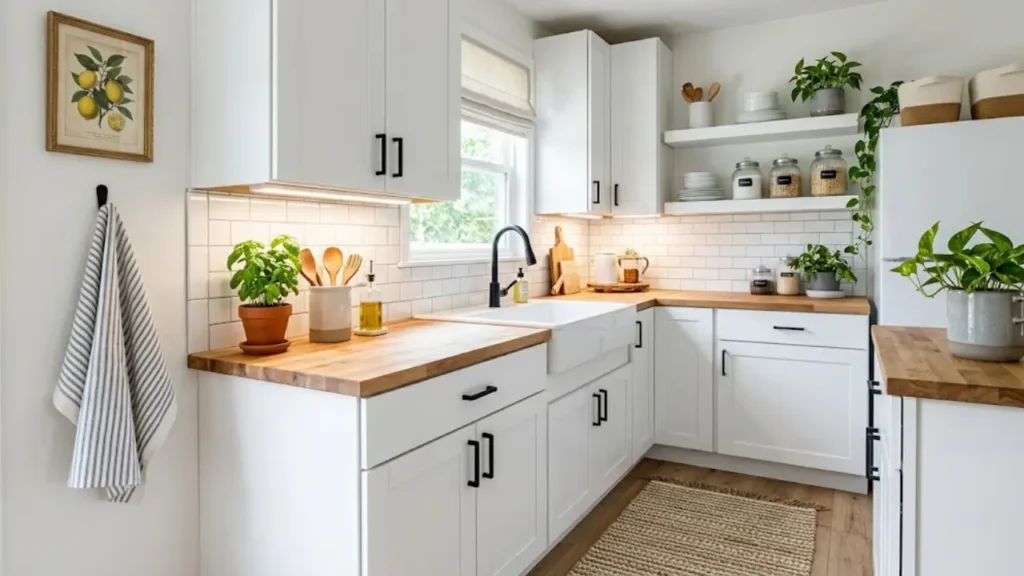
Cabinet hardware is one of the lowest-cost, highest-impact changes available when decorating a small kitchen on a budget. A set of pulls in a warm brass or matte black finish costs less than $30 to $50 for a small kitchen’s worth of cabinets, takes under an hour to swap, and transforms how the entire cabinet run reads visually.
The reason this works so well is that hardware is the jewelry of a kitchen. It’s the detail the eye naturally travels to when scanning the room, and mismatched, builder-grade, or simply dated hardware pulls the whole kitchen down regardless of how nice the other elements are. New hardware in a cohesive finish, especially one that picks up a tone from elsewhere in the kitchen (wood countertops, a plant pot, a textile), makes the space feel considered rather than default.
The only practical note: measure the existing hole spacing before ordering anything, since most cabinets use either a 3-inch or 3.75-inch center-to-center spacing, and mismatching that means extra holes.
3. Use Peel-and-Stick Wallpaper or Tile on One Surface
A single surface treated with peel-and-stick wallpaper or removable tile, most commonly the backsplash area or the inside of open shelves, adds visual interest and personality to a small kitchen without any permanent modification. This is one of the few genuinely transformative budget changes available in a rental kitchen specifically because it’s fully reversible.
The surfaces that work best for this are the backsplash area behind the stove (where a simple geometric or tile pattern adds the most impact for the least material), the interior back panel of open shelves (where a contrasting color or subtle pattern makes displayed items pop), and the side panel of an island or peninsula if one exists.
The key to making peel-and-stick tile or wallpaper look intentional rather than temporary is choosing a pattern that’s simple and scaled correctly for the surface. Large patterns on small surfaces look cramped. Small repeating patterns in a consistent color family look architectural rather than craft-project.
4. Add a Plant or Two (But Choose the Right Ones)
A plant on a kitchen counter or windowsill adds life, color, and warmth to a small kitchen in a way that no inanimate decorative object quite replicates. The visual interest a plant provides comes from its texture and organic shape, which contrasts softly with the hard, flat surfaces that dominate most kitchens.
The practical consideration in a kitchen is that not all plants thrive there. A kitchen gets fluctuating humidity from cooking, temperature changes from the oven, and often limited natural light if the window is small or faces north. Plants that handle these conditions well include pothos, which tolerate low light and irregular watering well, fresh herb pots like basil or rosemary that are functional as well as decorative, and small succulents near a window if the light is better.
One well-chosen plant in the right spot reads more intentional than several mismatched plants scattered around without logic. A single pothos in a ceramic pot near the window, or a trio of herb pots on a shelf above the sink, creates more visual impact than a collection of plants in different containers at different stages of health.
5. Introduce a Kitchen Textile That Anchors the Color Palette
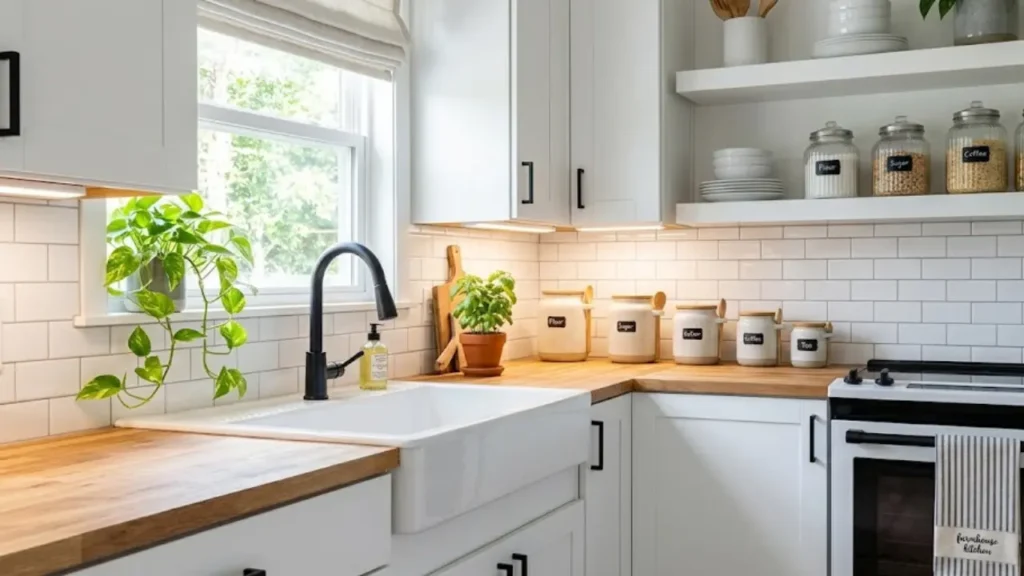
Most small kitchens have almost no soft furnishings, which makes the room feel harder and colder than other rooms in the home. A set of kitchen towels, a small rug in front of the sink, or a simple curtain over a window under-cabinet area introduces texture and color without touching any permanent surface.
The value of this for decorating a small kitchen on a budget is that textiles are inexpensive, washable, and changeable. They’re the easiest way to introduce a color accent that ties the kitchen into the home’s broader palette without committing to anything structural.
The textile choice that does the most work with the least investment is usually the kitchen towel, since it’s always on display when hanging from an oven handle or a towel bar, it comes in a wide range of colors and textures, and replacing it when you want a seasonal or color change costs almost nothing. A striped linen towel in a color that picks up a tone from the rest of the kitchen, whether that’s a plant’s green or a countertop’s warm wood, visually connects disparate elements without requiring any additional purchases.
6. Rethink the Open Shelving You Already Have
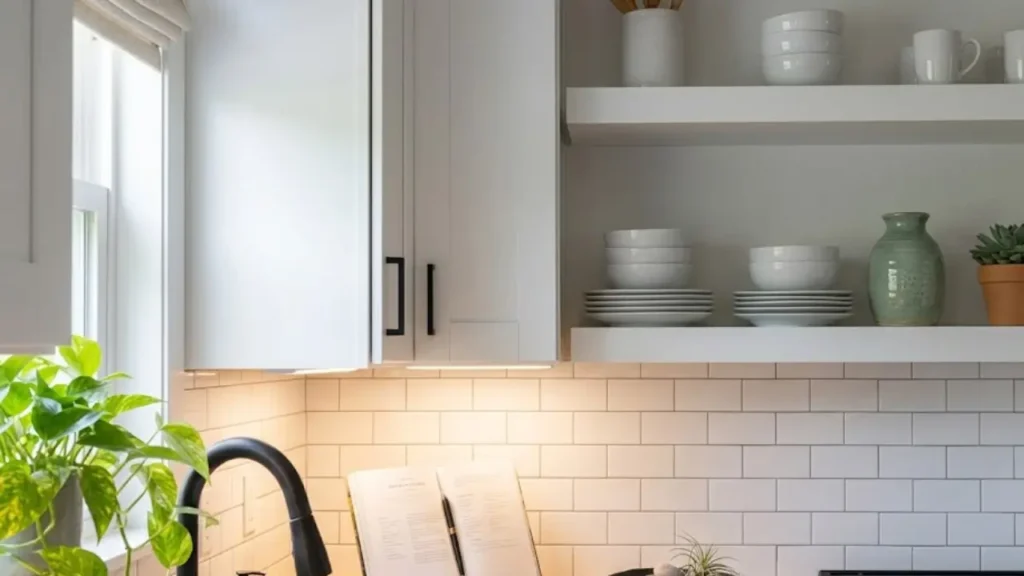
Many small kitchens have at least one section of open shelving, and most of the time it becomes a functional storage spot rather than a decorative one, which means it’s full of mismatched cups, dusty items pushed to the back, and everything that didn’t fit in a cabinet. Rethinking what lives on those shelves, rather than adding new shelves, is a free decorating upgrade that changes the kitchen’s entire feel.
The editing principle that works: open shelves should hold things you reach for often, displayed in a way that looks intentional. Everyday white or matching dishes stacked consistently. A few glasses in the same style. A plant or small ceramic object that adds visual interest without clutter. The things that don’t meet those criteria move behind a cabinet door.
The approach to making open shelving work as both storage and decor, including which items display well and how to style the negative space between objects, is covered in detail in our kitchen open shelving guide.
7. Improve the Lighting With Under-Cabinet Strips
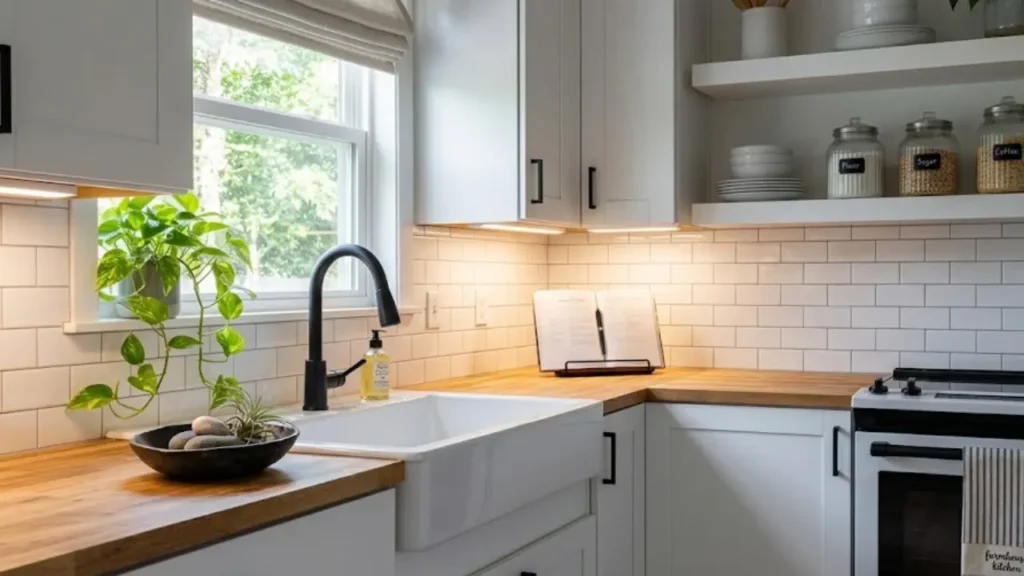
Lighting is where most small kitchens lose the most ground visually, because a kitchen with only overhead light has dark, shadowy counter surfaces that make the room feel compressed and uninviting regardless of how clean or well-decorated it is.
Peel-and-stick or plug-in LED strips under the upper cabinets solve this without any electrical work and without permanent modification. The light they add at counter level eliminates counter shadows, makes the backsplash more visible, and gives the kitchen a warm, layered quality that overhead lighting alone never achieves.
The bulb temperature matters here just as much as having the strips at all. Warm-toned LEDs (2700K to 3000K) work best in kitchens with wood tones, warm cabinet colors, or cream and off-white palettes. Cool-toned LEDs (4000K) suit kitchens with gray, white, or high-contrast finishes better. Choosing the wrong temperature makes the light look off even when the fixture itself is fine.
A set of rechargeable peel-and-stick LED cabinet lights is one of the most effective budget purchases available for a small kitchen specifically because it addresses the root cause of why most small kitchens feel darker and smaller than they need to, with no installation required.
8. Use Color Intentionally on One Surface
Decorating a small kitchen on a budget doesn’t require painting the whole room to introduce color effectively. Painting just the inside of open shelves, adding a colored runner rug, or choosing a single colored ceramic container as a utensil holder introduces a color accent that makes the kitchen feel more personal without requiring full commitment or landlord approval.
The one-surface approach works because it creates a focal point without fragmenting the room’s visual continuity. A kitchen that’s neutral everywhere except for a warm terracotta rug in front of the sink, or sage green plates on otherwise white open shelves, reads as intentionally styled rather than decorated by default.
This same principle of using one surface or accent to introduce color while keeping the rest of the room quiet applies across every room in a small home. The way a single color accent can change the feel of a neutral room without overwhelming it comes up specifically in the bedroom context in our guide to small bedroom color ideas, and the underlying logic transfers directly to a small kitchen.
9. Style the Top of the Refrigerator
The top of the refrigerator is almost universally wasted in small kitchens, used as overflow storage for items that don’t fit anywhere else, which makes it one of the most visually prominent clutter zones in the room. Clearing it completely and replacing the clutter with two or three intentional objects transforms that eye-level surface from a liability into an asset.
Objects that work well on top of a refrigerator: a trailing plant like a pothos that softens the hard edge of the appliance, a small basket that holds one category of item neatly rather than a loose pile of miscellaneous things, or a decorative canister or container that matches something else in the kitchen’s palette.
The styling principle is the same one that applies to nightstands, coffee tables, and console tables elsewhere in the home: fewer, more intentional objects read better than more, randomly accumulated ones. The broader version of this editing principle, applied room by room, is covered in our whole-home organization guide for small spaces.
10. Hang a Small Piece of Art or a Functional Wall Object
Most kitchens have at least one wall section that isn’t covered by cabinets, usually near the entry, beside the refrigerator, or opposite the sink. This wall often stays completely bare, which makes it feel like a missed opportunity in a small kitchen where every surface contributes to the overall feel of the space.
A small piece of art, a vintage-style food print, a simple abstract, or a functional object like a mounted knife strip or a wall-hung herb garden, adds personality to that surface without taking up any counter or floor space. The choice doesn’t need to be expensive. A frame from a secondhand store with a printed botanical illustration costs almost nothing and adds more character than most dedicated kitchen decor items.
The only practical consideration is that kitchen walls near the stove or sink get exposure to steam, grease, and moisture. Hanging anything valuable or moisture-sensitive near those specific spots isn’t ideal. The wall beside the refrigerator or near the entry is usually safe for any normal wall decor.
11. Create Visual Continuity With Matching Containers
A collection of mismatched containers, different brands, different materials, different heights, on countertops or open shelves creates visual busyness that makes a small kitchen feel more cluttered than it actually is. Switching to a matching set of canisters or containers for dry goods, utensil holders, or countertop storage removes that visual noise and makes the counter read as more organized even when the quantity of items hasn’t changed.
This works for the same reason matching hangers improve a closet without reducing what’s stored there. The consistency removes the visual work of processing many different objects and lets the eye rest. A set of three matching ceramic canisters in a neutral or accent color on an otherwise clear counter reads as a styling choice rather than clutter.
The canister swap is one of the better budget purchases for a small kitchen because it addresses both the organizational and the decorative problem simultaneously. And like most container choices, it moves with you when you leave, making it suitable for rentals with no modification required.
12. Address the Sink Area Specifically
The sink area is one of the most-used and most-visible spots in any kitchen, and in a small kitchen it takes up a significant portion of the available counter surface. It also tends to be one of the least decorated spots, occupied by dish soap, a sponge holder, and whatever else accumulates around the drain.
Treating the sink area as a small vignette, a coordinated soap dispenser, a small plant on the windowsill above it if there is one, a single clean sponge holder rather than a collection of cleaning products in their original packaging, makes this high-visibility spot feel intentional. Decanting dish soap into a simple pump bottle costs a few dollars and removes one of the most visually disruptive elements in the sink area.
This level of attention to a specific functional zone is part of what separates a kitchen that’s been thought about from one that just exists. The same principle of treating high-use areas with extra intentionality applies to the nightstand in a bedroom, as discussed in our breakdown of small bedroom decorating mistakes, where surface editing in high-use spots has the same outsized effect.
13. Connect the Kitchen to the Rest of the Home Visually
In an open-plan apartment or a small home where the kitchen is visible from the living area, the kitchen’s decor affects how the whole space feels, not just the kitchen itself. A kitchen that clashes visually with the adjacent living room creates a sense of disconnection that makes both spaces feel smaller and less cohesive.
Carrying at least one element from the kitchen into the adjacent living space, a shared accent color, a similar material (a wood cutting board that echoes wood furniture nearby), or a plant that bridges the two rooms visually, connects the spaces in a way that makes the overall apartment feel more unified.
This cross-room thinking matters most in studio apartments and open-plan layouts where the kitchen and living area share visual space. The specific ways to handle color and decor continuity across a small apartment, including how the rental context affects what’s feasible, are covered in both our guide to decorating a rental apartment on a budget and our ideas for making a rental apartment feel like home.
And if the kitchen opens directly onto a small living room, the layout and visual continuity choices you make in that living space directly affect how the kitchen reads too. Our breakdown of small apartment living room ideas covers how to handle the visual connection between these two spaces when they share the same open floor plan.
Where to Start When the Budget Is Genuinely Tight
If the budget for decorating a small kitchen is truly minimal, the order that produces the most visible improvement for the least money is roughly this: clear the counters and edit the open shelves first (free), swap the cabinet hardware second (under $40 for most small kitchens), add a plant or a kitchen textile third (under $20), and address the lighting with under-cabinet strips fourth ($15 to $30 for a simple plug-in set).
Those four steps, none of them requiring a contractor, a landlord’s approval for permanent changes, or more than a few hours of effort, produce a kitchen that feels genuinely different from the one you started with. Everything else on this list is a layer on top of that foundation.
Decorating a small kitchen on a budget is really about making deliberate choices rather than expensive ones. The kitchens that feel the most put-together aren’t the ones where the most money was spent. They’re the ones where every visible element was considered rather than accumulated by default.
For a broader look at how these same principles apply across a whole small apartment, whether that’s the bedroom, living room, or general organization, our complete guide to home organization ideas for small spaces covers the cross-room version of the same thinking.
People Asked How to Decorate a Small Kitchen
How do you decorate a small kitchen on a tight budget?
Start with what costs nothing: clear the countertops of everything non-essential and restyle any open shelves you already have. From there, swapping cabinet hardware (usually under $40 for a small kitchen) and adding a plant or kitchen textile produces the most visible improvement for the least money. Under-cabinet LED strips come next and make a bigger difference to the room’s feel than almost anything else at that price point.
Can you decorate a rental kitchen without permanent changes?
Yes. The most effective rental kitchen upgrades, counter editing, hardware swaps (the existing hardware goes back in when you leave), peel-and-stick backsplash tiles, plug-in under-cabinet lighting, textiles, and plants, all require no permanent modification and most move with you when you go.
What is the single biggest difference-maker when decorating a small kitchen?
Clearing the countertops has the most immediate visual impact for zero cost. After that, under-cabinet lighting makes the biggest visible difference because it eliminates the counter shadows that make small kitchens feel compressed and uninviting, which no amount of surface decoration can fix.
How do you make a small kitchen feel more personal without repainting?
Textiles (dish towels, a runner rug), plants, a coordinated set of canisters, and one piece of art or a functional wall object each add personality without touching a painted surface. A single accent color carried across these elements, a terracotta pot, a matching towel, a ceramic container in the same tone, ties them together into something that reads as intentional.
How do you connect a small kitchen visually to an open-plan living room?
Carry at least one element across both spaces: a shared accent color, a similar material, or a plant that visually bridges the two areas. In an open-plan layout, the kitchen and living room are always in each other’s sightline, so clashing decor in one makes the other feel off too. Keeping the two spaces in the same general color family and material palette creates a sense of cohesion that makes the whole apartment feel more intentional.