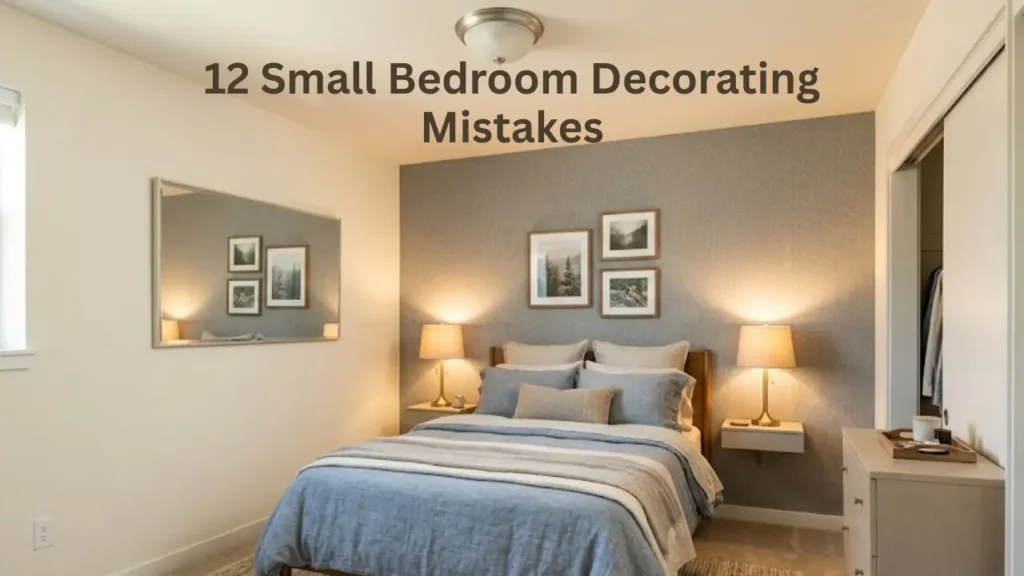

A small bedroom rarely feels wrong because of one obvious problem. It’s usually three or four small mistakes stacked on top of each other, each one minor on its own, that together make the room feel tighter and more chaotic than its actual square footage requires.
I’ve made most of the mistakes on this list, sometimes more than once, in apartments where the bedroom genuinely couldn’t get any bigger no matter what I did. What changed things wasn’t acquiring more space. It was noticing which specific habits were quietly working against the room and fixing them one at a time.
This guide walks through 12 small bedroom decorating mistakes that show up constantly, why each one has a bigger effect than it seems, and what to do instead. Some of these connect to bigger decisions about layout, color, or storage, and where that’s the case, this guide points to the deeper resource so you’re not stuck guessing at the fix.
1. Choosing a Bed That’s Too Big for the Room
This is the mistake that sets every other problem in motion. A queen or king bed crammed into a room that realistically calls for a full, because a queen “feels like the right size for a bedroom,” eats up the clearance needed to walk around comfortably and dictates everything else about the layout, usually for the worse.
The fix isn’t always downsizing the bed. Sometimes it’s accepting that a slightly smaller bed with proper clearance on both sides will feel more comfortable day to day than a bigger bed that leaves only 14 inches to squeeze past. Getting this decision right from the start makes nearly everything else in the room easier. The full breakdown of clearance numbers and bed placement logic is covered in how to arrange furniture in a small bedroom, which is worth reading before buying a new bed for a small room, not after.
2. Blocking the Closet Door Without Realizing It
This mistake is sneaky because it often isn’t visible until the door is actually opened all the way. A dresser, a bench, or even a pile of laundry placed in a spot that seems fine at a glance can end up partially obstructing the closet door’s swing or sliding path.
The result is a small daily friction, having to shuffle a piece of furniture or squeeze past it every morning, that adds up over months without ever feeling like a single dramatic problem. Walking through your actual morning routine before finalizing any furniture placement catches this almost every time. The closet organization itself matters too, since a well-organized closet that’s hard to physically access doesn’t solve much. The ideas in small bedroom closet organization only pay off if the door and access path stay clear in the first place.
3. Using a Single Overhead Light and Nothing Else
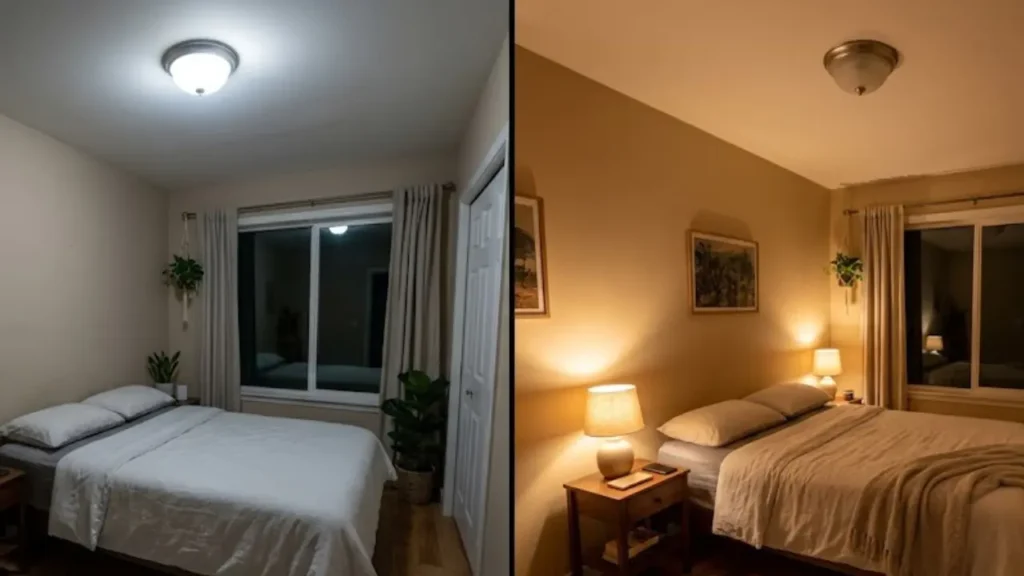
A small bedroom with one ceiling fixture and no other light source ends up flat and harshly lit at night, with corners falling into shadow and almost no warmth to the room. This is one of the most common mistakes across small spaces generally, not just bedrooms, but it matters even more in a room whose entire purpose is rest and calm.
A bedroom benefits from at least one warm-toned lamp in addition to overhead lighting, positioned near the bed or a reading chair if there’s room for one. The color temperature of the bulb matters as much as having a lamp at all. A cool white bulb in a warm room undercuts the cozy effect a lamp is supposed to create. The broader topic of layering warmth into a small bedroom through lighting, texture, and color together is covered in 15 ways to make a bedroom feel cozy on a real budget.
4. Pushing the Bed Into a Corner by Default
Tucking a bed into a corner, accessible from only one side, feels like the obvious small-room solution, and sometimes it genuinely is the only option. But it’s often chosen by default rather than necessity, and it comes with real downsides: only one person can get in or out easily, and the inaccessible side tends to become a permanent clutter trap because reaching it is inconvenient.
Centering the bed on its longest available wall, even with modest clearance on both sides, usually beats a corner placement with generous space on one side and zero on the other. This decision, along with several others about bed placement and walkway clearance, is covered in depth in the furniture arrangement guide for small bedrooms.
5. Choosing a Rug That’s Too Small for the Room
This mistake is more common in living rooms, but it shows up in bedrooms too, especially when a rug is chosen purely for color or pattern without considering how it interacts with the bed and any other furniture in the room. A rug that only peeks out from under the foot of the bed, rather than extending far enough to anchor the space around it, ends up looking like an afterthought rather than a deliberate choice.
In a bedroom, the rug ideally extends at least 18 to 24 inches past the sides of the bed, in line with recommended rug size proportions for bedrooms, so it reads as a defined zone rather than a small mat that got lost under the furniture. The general principles behind correct rug sizing, which apply just as much in a bedroom as a living room, are covered in how to choose a rug for a small living room, and the same sizing logic transfers directly.
6. Letting Every Wall Compete for Attention
A small bedroom with art, shelving, and decor covering every available wall surface ends up feeling busy and restless rather than calm, which works against the room’s basic function. This is especially common when people feel like every blank wall in a small space is “wasted” if it isn’t doing something.
Leaving at least one wall, often the one without the headboard, intentionally simple gives the room a visual pause that makes the rest of the decor feel more curated by comparison. This principle of restraint comes up constantly across small space decorating generally, and it’s covered specifically for bedrooms in small bedroom color ideas, where color continuity and visual calm work together to make a room feel larger and more settled.
7. Skipping a Mirror Entirely
A bedroom mirror is functional, obviously, but skipping one entirely is a missed opportunity in a small room specifically because of what a well-placed mirror does visually. A mirror positioned to reflect a window or an open part of the room bounces natural light around and adds a sense of depth that a small bedroom often needs.
This doesn’t require a large furniture purchase. A mirror leaned against a wall, rather than a dedicated full-length mirror in a stand, accomplishes the same visual goal while taking up minimal floor space. The specific placement strategies that maximize this effect, including which walls work best and which to avoid, are covered in how to use mirrors to make a small living room look bigger, and the same logic about reflecting light rather than facing it directly into a seating or sleeping area applies in a bedroom too.
8. Treating the Closet as the Only Storage Option
When a small bedroom’s closet fills up, the instinct is often to just cram more in rather than rethinking storage altogether. This leads to an overstuffed closet that’s hard to use, while other storage opportunities in the room, under the bed, vertical wall space, multipurpose furniture, go completely untapped.
A small bedroom has more storage potential than the closet alone suggests, especially once vertical space and under-bed storage enter the picture. The detailed breakdown of these additional storage approaches, including specific solutions for rooms where floor space is the real constraint, is covered in small bedroom storage ideas.
9. Choosing a Cool-Toned Color Without Checking the Room’s Natural Light
This is a subtler mistake, but it shows up constantly. A cool gray or blue paint color that looked elegant on a swatch or in someone else’s well-lit room can read as flat and slightly cold in a bedroom that doesn’t get much warm natural light, particularly north-facing rooms where the ambient light is already cool-toned.
Checking which direction a bedroom faces, and choosing warm or cool wall colors accordingly, prevents a common disappointment where a color that seemed perfect in the store looks completely different once it’s actually on the wall. This and several other color mechanics specific to small bedrooms are covered in detail in the small bedroom color ideas guide referenced earlier, including which undertones work best for rooms with limited or cool natural light.
10. Letting Visible Surfaces Become Catch-All Clutter Zones
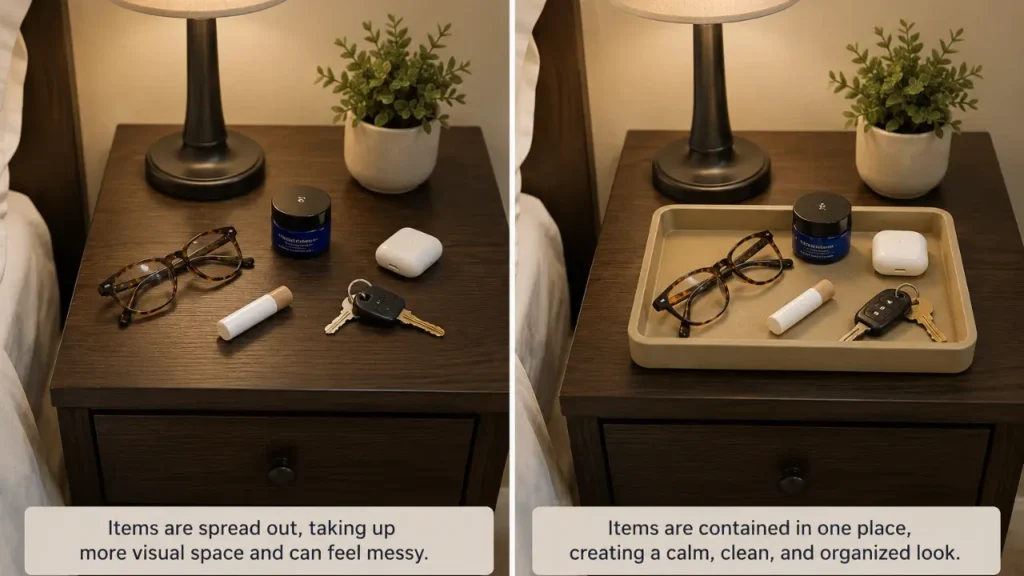
A dresser top, a nightstand, or a windowsill that accumulates loose change, chargers, mail, and miscellaneous items over time quietly undermines an otherwise well-decorated room. This kind of clutter doesn’t usually happen all at once. It builds gradually, a few items at a time, until a previously clean surface is visually noisy without anyone quite noticing the transition.
A small tray or shallow dish on a nightstand for the items that do need a home, rather than letting them spread loose across the surface, contains the clutter without requiring it to disappear entirely. This is a small habit more than a decorating purchase, but it has an outsized effect on how finished a small bedroom feels day to day.
11. Decorating a Rental as if It’s Permanent, or Not Decorating It at All
Two opposite mistakes show up around rentals specifically. Some people under-invest in a rental bedroom because it feels temporary, leaving walls bare and the room feeling unfinished for as long as they live there. Others try to make permanent changes that aren’t appropriate for a rental, only to lose the deposit or have to undo everything before moving out.
The better approach sits between those two extremes: investing in removable, reversible changes (removable wallpaper, tension rods, peel-and-stick elements, freestanding furniture) that make the space feel genuinely personal without requiring permanent alteration. The specific strategies for striking this balance, treating a temporary space as worth decorating well without overcommitting to changes that can’t come with you, are covered in how to make a rental apartment feel like home.
12. Decorating the Bedroom in Isolation From the Rest of the Home
This last mistake is more conceptual, but it matters. A bedroom decorated with zero connection to the color palette, style, or materials used elsewhere in the home can feel disjointed, like a separate apartment was dropped into one room. This is especially common when a bedroom gets decorated last, after the living room and kitchen are already settled, and ends up an afterthought stylistically.
Carrying at least a loose thread of consistency, a shared color family, a similar mix of textures, a few repeated materials, between the bedroom and the rest of the home creates a sense that the whole space was considered together, even in a small apartment where every room is visible from the others. If the rest of your home leans toward a particular palette, the living room color and wall color guides on this site cover the same underlying principles of cohesion that apply just as much to a bedroom as to a living room.
Why These Mistakes Compound in a Small Bedroom
Each of these 12 mistakes, looked at individually, seems minor. A slightly-too-small rug. One overhead light. A cluttered nightstand. None of them would ruin a large bedroom on their own.
In a small bedroom, though, there’s no extra space to absorb these small missteps. A large room can have an undersized rug and still feel fine, because there’s enough surrounding space to dilute the effect. A small room has no such buffer, so every mistake reads more clearly and compounds with the others nearby.
This is really the core reason a small bedroom decorating project benefits from fixing several small things rather than searching for one big transformative change. The bed placement, the lighting, the rug size, the closet access, the wall color, none of these are dramatic individually, but addressing several of them together is usually what actually shifts a room from feeling cramped to feeling calm and intentional.
Final Thoughts: Small Bedroom Decorating Mistakes
If several of these mistakes sound familiar in your own bedroom, it’s worth prioritizing rather than tackling everything simultaneously. Layout issues (bed placement, closet access) are usually worth solving first, since they affect daily function the most and often require rearranging furniture you already own rather than buying anything new.
Lighting comes next, since a couple of warm-toned lamps are inexpensive and produce an immediate, noticeable shift in how the room feels at night. Color and storage decisions tend to take more planning and sometimes more budget, so they’re reasonable to tackle once the more fundamental layout and lighting issues are settled.
None of these fixes require a full renovation or a large budget. Most of them are about noticing a habit or default choice that’s quietly working against the room, and deciding deliberately instead of by accident.
If lighting is the mistake you recognize most in your own bedroom, it’s usually the fastest one to fix. A warm-toned bedside table lamp with a 2700K bulb can replace harsh overhead light in a single evening, and it’s a small enough investment to try before tackling anything bigger on this list. For more bedroom-specific fixes like this, broken down room by room, the full collection of bedroom guides on Emerald Haven covers everything from layout to color to storage in more depth than any single article can.
FAQ: Small Bedroom Decorating Mistakes
What is the most common small bedroom decorating mistake?
Choosing a bed that’s too large for the room is one of the most common and consequential mistakes, since it dictates the clearance and layout of everything else in the space. A close second is relying on a single overhead light, which leaves the room feeling flat and cold rather than warm and restful.
How do you decorate a small bedroom without making it feel smaller?
Avoid stacking small mistakes on top of each other: an undersized rug, a single harsh light source, clutter on visible surfaces, and walls competing for attention all compound in a small room where there’s no extra space to absorb them. Fixing layout and lighting first tends to produce the most noticeable improvement before moving on to color and storage.
Should a bed go in the corner of a small bedroom?
Not by default. A bed tucked into a corner is only accessible from one side, which makes the inaccessible side prone to becoming a clutter trap. Centering the bed on its longest wall, even with modest clearance on both sides, usually works better than a corner placement with generous space on only one side.
Why does my small bedroom feel cluttered even though I’ve decorated it?
This often points to surfaces like nightstands or dressers slowly accumulating loose items over time, rather than a single dramatic clutter problem. A small tray or dish to contain frequently used items, rather than letting them spread across a surface, addresses this without requiring a full declutter.
What color mistakes do people make in small bedrooms?
Choosing a cool-toned color without considering the room’s natural light direction is a common one. A cool gray or blue that looks great in a bright, south-facing room can feel flat in a north-facing bedroom with naturally cooler light, since the color compounds the existing coolness rather than balancing it.