
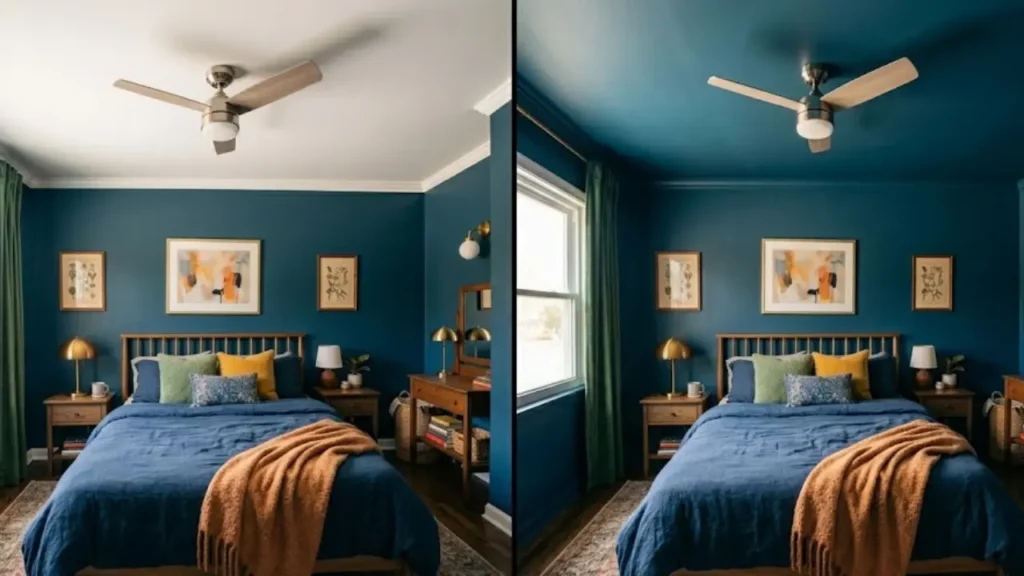

There’s a piece of decorating advice that gets repeated so often it’s basically accepted as fact: paint small rooms white, because dark colors make rooms look smaller. I believed this for years, until I actually painted a small bedroom a deep, warm color and watched it feel cozier and somehow larger than it had with the previous builder-grade white walls.
The truth about small bedroom color ideas is more nuanced than “go light or go home.” Color affects a room’s perceived size through light, contrast, and how the eye reads boundaries, not through some simple rule about dark versus light. Once you understand the actual mechanics, a lot more color options open up than the usual safe advice suggests.
This guide covers 12 small bedroom color ideas, why each one works (or works in specific conditions), and how to combine wall color with bedding, trim, and accents into something cohesive rather than accidental. Some of these will surprise you if you’ve only ever heard the “keep it light” version of this advice.
How Color Actually Affects a Small Bedroom’s Perceived Size
Before getting into specific small bedroom color ideas, it helps to understand the three things that actually drive how spacious a color makes a room feel: light reflectance, contrast between surfaces, and where the eye’s attention lands.
Light reflectance is the most literal factor. Lighter colors bounce more light around a room, and in a bedroom with limited natural light, that extra bounce can make the space feel more open. This is the basis of the “go light” advice, and it’s true as far as it goes. But it’s not the whole story.
Contrast matters just as much. A room where the walls, trim, and ceiling are all dramatically different colors creates visual breaks that make the eye stop and register boundaries, which can make a small room feel chopped up and smaller. A room where wall color flows into ceiling color, or where trim doesn’t fight the wall color, reads as more continuous and therefore larger, even if the actual color is dark.
Where attention lands is the subtlest factor. A small bedroom with one bold accent wall draws the eye to that wall and away from the room’s actual boundaries, which can trick the brain into underestimating how small the space is. A small bedroom painted a single flat color everywhere, with no visual anchor, sometimes reads as smaller because there’s nothing to draw the eye away from the room’s edges.
With those three principles in mind, here are the color approaches that actually work in a small bedroom, including a few that intentionally break the “always go light” rule.
1. Soft, Warm Whites Instead of Stark Cool Whites
This is the starting point most people land on, and for good reason, but the execution matters more than people realize. Not all whites behave the same way in a small bedroom.
Stark, cool whites (anything with a blue or gray undertone) can feel clinical and flat under artificial light, especially in a room without much natural daylight. Soft, warm whites (with a hint of cream or beige undertone) reflect light just as effectively but feel inviting rather than sterile.
If your bedroom currently has plain white walls and feels more cold than calm, the undertone is often the reason. The detailed guide on decorating a bedroom with white walls goes into specific white shades that work well in low-light rooms and how to layer texture and warmth around a white base so it doesn’t feel sterile.
2. A Deep, Moody Color on All Four Walls
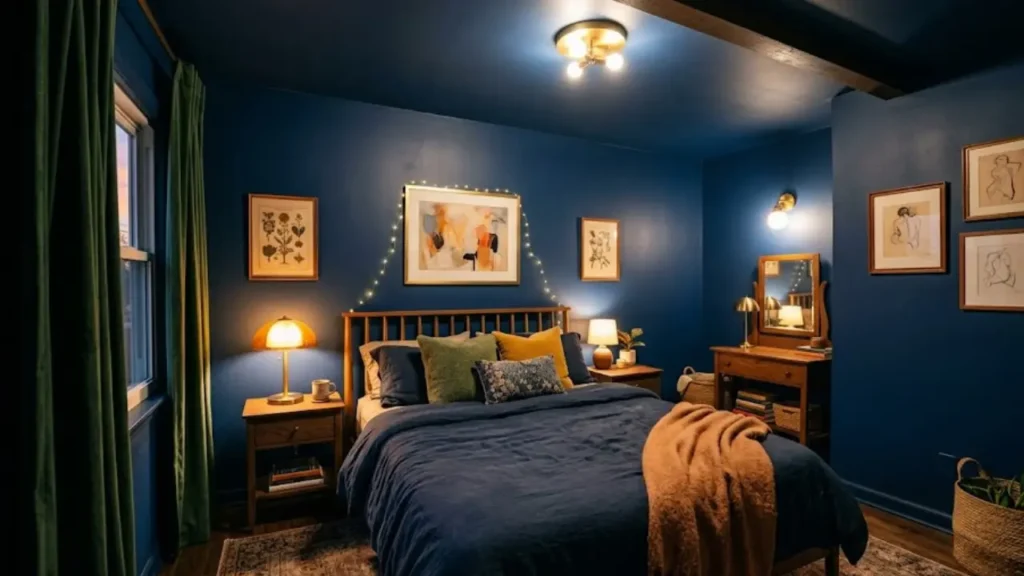
This is the idea that surprises people most, and it’s the one I mentioned at the start. A deep, saturated color (a dark forest green, a warm charcoal, a deep navy) applied to all four walls and sometimes the ceiling too, can make a small bedroom feel enveloping and cozy rather than cramped.
The mechanism here is contrast and boundary. When every wall is the same dark, saturated color, there’s no contrast between corners and walls, no visible “edge” where one wall stops and another begins. The room reads as one continuous, cocoon-like space rather than a small box with visible corners. This works especially well in bedrooms, where the goal isn’t to maximize the feeling of square footage, it’s to create a calm, restful mood.
This approach works best in bedrooms that get at least some natural light during the day, since an all-dark room with zero daylight can tip from cozy into genuinely gloomy. It also pairs well with warm-toned lighting layers rather than stark white LED bulbs, since the wrong light temperature can make a dark wall color look muddy instead of rich.
3. A Monochromatic Palette With Varied Textures
A monochromatic small bedroom color palette means staying within one color family, walls, bedding, curtains, even furniture, but varying the shade, tone, and texture within that family. A room in soft sage walls, a slightly deeper sage-gray bedspread, and cream linen curtains is monochromatic without being boring.
This approach avoids the visual chopping-up effect that happens when a small room has high-contrast color changes between walls, bedding, and furniture. Everything blends into a continuous palette, which makes the room’s actual boundaries less obvious to the eye.
The key to making monochromatic work without feeling flat is texture variation. A smooth painted wall, a slightly textured linen duvet, a chunky knit throw, and a woven rug in similar tones create depth and interest without introducing new colors that compete with each other.
4. Color the Ceiling to Match or Complement the Walls
Most people paint ceilings flat white by default, but in a small bedroom, a stark white ceiling against colored walls creates a hard visual stop that can actually make the room feel shorter and more boxed in.
Painting the ceiling the same color as the walls, or a slightly lighter or darker shade in the same family, removes that visual break and makes the room feel taller and more continuous. This is sometimes called “color drenching,” and it’s become a popular technique specifically because of this height-extending effect.
If a full ceiling color commitment feels like too much, even painting the ceiling a soft tint of the wall color (rather than stark white) softens the transition and produces some of the same benefit without the full visual impact of a fully colored ceiling.
5. Use an Accent Wall to Redirect Attention
A single accent wall, usually the wall behind the headboard, gives the eye somewhere to land that isn’t the room’s actual boundaries. This ties back to the “where attention goes” principle from earlier: a bold accent wall can make a small bedroom feel more dynamic and intentional, while the surrounding lighter walls keep the rest of the room feeling open.
The headboard wall is almost always the right choice for an accent, both because it’s the wall you see most often when entering the room, and because it gives the bed a visual anchor without requiring an actual statement headboard purchase.
This works particularly well in small bedrooms with awkward proportions, a narrow room, or a low ceiling, where a single bold wall draws focus and breaks up an otherwise plain box shape.
6. Choose Bedding That Continues the Wall Color Story
Color doesn’t stop at the walls in a small bedroom. Bedding, given how much visual real estate a bed takes up in a small room, has almost as much impact on the room’s overall color feel as the walls themselves.
Bedding that closely matches or complements the wall color extends that same boundary-blurring effect discussed earlier. A pale blue wall with white bedding and navy accent pillows feels cohesive. A pale blue wall with a bright orange bedspread creates a jarring contrast that draws attention to just how small the room actually is, because the eye is forced to register the bed as a separate, competing block of color.
If you’re working on making a small bedroom feel warm and inviting overall, not just visually larger, the article on 15 ways to make a bedroom feel cozy on a real budget covers how bedding texture and color work together with lighting to create that effect without needing to repaint anything.
7. Keep Trim Color Close to the Wall Color
Bright white trim against a colored wall is a classic, traditional look, and it works beautifully in larger rooms. In a small bedroom, that high contrast between trim and wall can have the same chopping-up effect as a stark white ceiling: it creates visible lines that make the eye register exactly where the room’s boundaries are.
Painting trim the same color as the walls, or a very close shade, removes that contrast and lets the wall color flow more continuously around the room’s edges, windows, and doors. This is a particularly good technique in older homes or rentals with a lot of trim detail, crown molding, door frames, baseboards, since all of that detail can visually fragment a small room if it’s painted in a contrasting color.
8. Use Color to Disguise an Awkward Architectural Feature
Many small bedrooms have at least one architectural quirk: a radiator, an exposed pipe, a closet door that doesn’t quite match the room, an HVAC unit. Painting these features the same color as the surrounding wall, rather than leaving them in a contrasting original finish, makes them visually recede instead of standing out as an obvious flaw.
This is a low-cost, high-impact technique specifically because it doesn’t require fixing or replacing the feature itself, just changing how visible it is. A radiator painted to match the wall color disappears into the background in a way a radiator left in its original cream or silver finish never will in a colored room.
9. Choose Warm Neutrals Over Cool Grays for North-Facing Rooms
This is a detail that gets overlooked constantly. The direction a bedroom faces changes how any given color actually looks once it’s on the wall, because natural light has a different color temperature depending on orientation.
North-facing rooms get consistent but cooler, bluer light throughout the day. A cool gray that looks elegant in a south-facing showroom can look flat, even slightly sad, in a north-facing bedroom, because the existing light is already cool and the gray amplifies that coolness rather than balancing it.
Warm neutrals, soft greiges, warm taupes, creamy off-whites, tend to perform much better in north-facing small bedrooms because they counteract the cool light rather than compounding it. If you’re unsure which direction your bedroom faces, take note of what time of day the room feels brightest. Morning brightness usually means an east-facing room, afternoon and evening brightness usually means west or south-facing, and consistently flat, even light throughout the day usually points to north-facing.
10. Use a Two-Tone Wall Treatment to Add Height
Splitting a wall horizontally, a darker color on the bottom two-thirds and a lighter color (or white) on the top third, is a technique that can make ceilings feel taller in a small bedroom with a lower-than-ideal ceiling height.
The visual logic is that the eye reads the lighter upper section as part of the ceiling plane, which extends the apparent ceiling height upward. This works especially well paired with a picture rail or simple trim line marking the transition point, which adds a finished, intentional look rather than appearing like an unfinished paint job.
This technique pairs well with idea 4 (matching ceiling color), since both are working toward the same goal of visually extending the room’s vertical space.
11. Let One Wall Stay Completely Unpainted Brick, Wood, or Original Material
If your small bedroom has an original architectural material, exposed brick, original wood paneling, a textured plaster wall, leaving it in its natural state rather than painting over it can serve the same “redirect attention” function as a bold accent wall, while adding genuine texture and history to the room.
This works particularly well in older buildings and rentals where these features often exist behind layers of paint or were preserved during a renovation. The natural material’s texture creates visual interest without needing to introduce another paint color into the room’s palette, which keeps the overall color story simpler and more cohesive.
12. Build the Palette Around What’s Already Permanent
This last idea is more of a strategic principle than a specific color choice, but it’s the one that ties everything else together. Before choosing any new wall color, bedding, or accent pieces, take stock of what’s already fixed in the room and can’t easily change: flooring material and color, any built-in cabinetry, window frame color, and any large furniture pieces you’re keeping regardless of a repaint.
Building a small bedroom color scheme around these fixed elements, rather than choosing a wall color in isolation and hoping everything else works with it, prevents the disjointed, accidental-feeling palette that makes a lot of small rooms look chaotic despite individually nice pieces. If your flooring has warm wood tones, a cool blue-gray wall color will always feel slightly at odds with it, no matter how nice that blue-gray looks on a paint swatch.
If you’re furnishing the room from scratch or working within a rental’s existing finishes, the storage and furniture choices you make also need to work within this same color logic. The guide on small bedroom storage ideas covers furniture and storage options that can be chosen specifically to complement, rather than compete with, whatever color palette you land on.
Putting a Small Bedroom Color Palette Together
If all 12 of these ideas feel like a lot to take in at once, here’s a simplified way to approach an actual decision.
Start with the fixed elements in the room (flooring, trim, anything permanent) and identify whether they lean warm or cool. Choose a wall color family that complements that direction rather than fighting it. Decide whether you want a light, airy approach or a deep, cozy approach, both can work, but they call for different supporting choices. If going light, keep ceiling and trim close in tone to avoid harsh contrast lines. If going deep and moody, consider extending that color to the ceiling and make sure the room gets some natural light during the day to avoid feeling gloomy.
From there, bedding and accents should echo the wall color family rather than introducing a competing, high-contrast palette. The goal throughout is continuity: a room where color flows from wall to ceiling to trim to bedding without abrupt breaks will almost always feel calmer and more spacious than a room with the same square footage and a more fragmented color scheme.
Color is one of the most reversible decorating decisions you can make, a coat of paint over a weekend, in a way that furniture layout or room renovations simply aren’t. That makes it one of the lowest-risk, highest-impact places to start if your small bedroom currently feels more cramped or chaotic than it should.
FAQ: Small Bedroom Color Ideas
What color makes a small bedroom look bigger?
Soft, warm whites and light neutrals are the most reliable choice because they reflect more natural light around the room. That said, color isn’t only about light versus dark. Reducing contrast between walls, ceiling, and trim, and keeping bedding in the same color family as the walls, often matters just as much as the specific shade chosen.
Should you paint a small bedroom a dark color?
Yes, this can work well, particularly in bedrooms that get some natural daylight. A deep, saturated color on all four walls removes the contrast between corners, which makes the room feel like one continuous, cozy space rather than a small box with visible edges. It tends to work best in rooms used primarily for sleeping and relaxing, where a cocoon-like feeling is a benefit rather than a drawback.
What ceiling color works best in a small bedroom?
Matching the ceiling to the wall color, or using a slightly lighter tint of the same color, removes the hard visual break that a stark white ceiling creates against colored walls. This technique, sometimes called color drenching, tends to make a small room feel taller and more continuous rather than boxed in.
Should bedroom trim match the wall color in a small room?
In most small bedrooms, yes. Bright white trim against a colored wall creates contrast that highlights exactly where the room’s boundaries are, which can make the space feel more chopped up. Painting trim the same color as the walls, or a very close shade, lets the color flow more continuously around the room.
What is the best color for a north-facing small bedroom?
Warm neutrals, such as soft greiges, warm taupes, or creamy off-whites, tend to work better than cool grays in north-facing rooms, because north light is naturally cooler and bluer throughout the day. A cool gray wall color can compound that coolness and feel flat, while a warm neutral balances it out.



Pingback: 13 Small Bedroom Closet Organization Ideas That Actually Work