
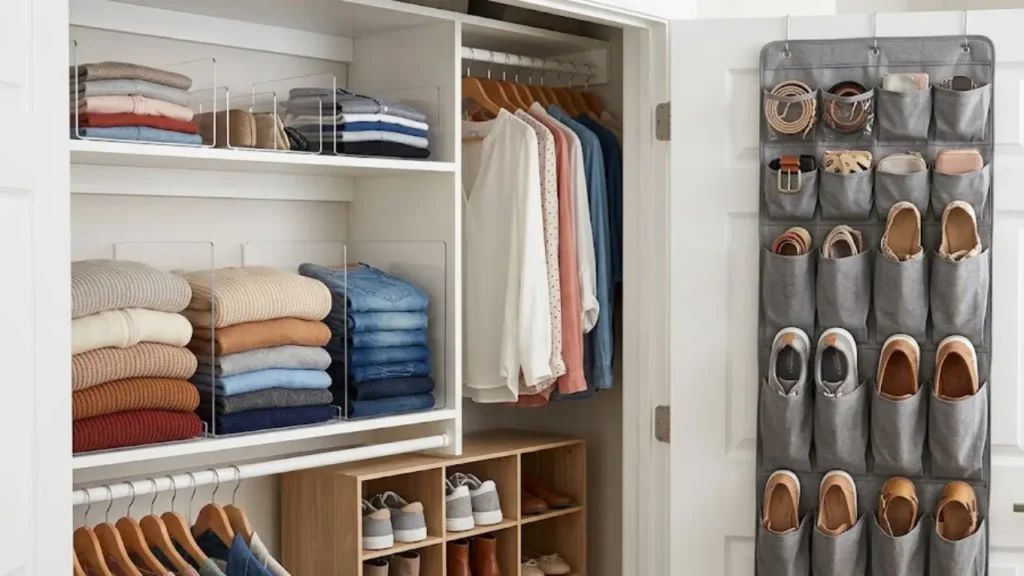

Most small bedroom closets aren’t actually too small to fit everything. They’re just organized in a way that wastes most of the space they have. A single hanging rod with a shelf above it, the default setup in almost every rental, uses maybe half of the closet’s actual volume.
I learned this the hard way in an apartment with a closet barely deep enough to hang clothes without them brushing the back wall. The instinct was to think the closet itself was the problem. It wasn’t. The organization system was. Once I added a second hanging rod, some shelf dividers, and rethought what actually needed to hang versus fold, the same closet held noticeably more, and finding anything became faster instead of slower.
This guide covers 13 small bedroom closet organization ideas that work within the constraints most people actually have: rental restrictions, limited budgets, and closets that weren’t designed with much thought. Some require buying something. Most don’t.
Why Most Small Closets Are Underused, Not Actually Too Small
Before getting into specific ideas, it’s worth understanding the default setup that most closets come with and why it wastes so much vertical space.
A standard reach-in closet has one rod, usually hung around 66 to 68 inches from the floor, with a single shelf above it. This setup assumes every single item you own needs to hang at full length, which almost never matches reality. Shirts, folded sweaters, shoes, and accessories all have completely different storage needs, but a single rod and shelf treats them all the same way.
The space below a hanging rod, from the bottom of a folded shirt or short dress down to the floor, is almost always wasted in this default setup. That’s often 30 to 40 inches of vertical space doing nothing. Recovering that space, through double rods, shelving units, or floor storage, is where most of the real capacity increase comes from in small bedroom closet organization.
1. Add a Second Hanging Rod for Shorter Items
This is the single highest-impact change available in most small bedroom closets, and it usually doesn’t require any major purchase. A second rod installed below the existing one, sized to fit shirts, folded pants, and skirts rather than full-length dresses, can roughly double hanging capacity in the same footprint.
Most closet rod brackets and tension rods are inexpensive and don’t require permanent drilling, which matters in a rental. A double rod setup works best when you separate by garment length first, full-length items (dresses, coats, long skirts) go on one section with a single high rod, and everything else gets the double rod treatment.
This single change recovers most of that wasted lower space described above, without adding any new furniture or taking up any additional floor area.
2. Use Vertical Space With Stackable Shelf Units
The floor of a small closet, especially below shorter hanging items, is prime real estate that often sits empty or becomes a dumping ground for shoes in a pile. A stackable shelf unit or small set of cubbies designed to fit closet floor dimensions turns that space into organized, visible storage.
These units work especially well for shoes, folded sweaters, or bins, and because they’re freestanding, they move with you if you’re in a rental and eventually relocate. The key measurement to check before buying one is the closet’s floor depth and width, since reach-in closets vary more than people expect, and a unit that’s even an inch too deep can make the closet door difficult to close.
3. Install Shelf Dividers to Stop Stack Avalanches
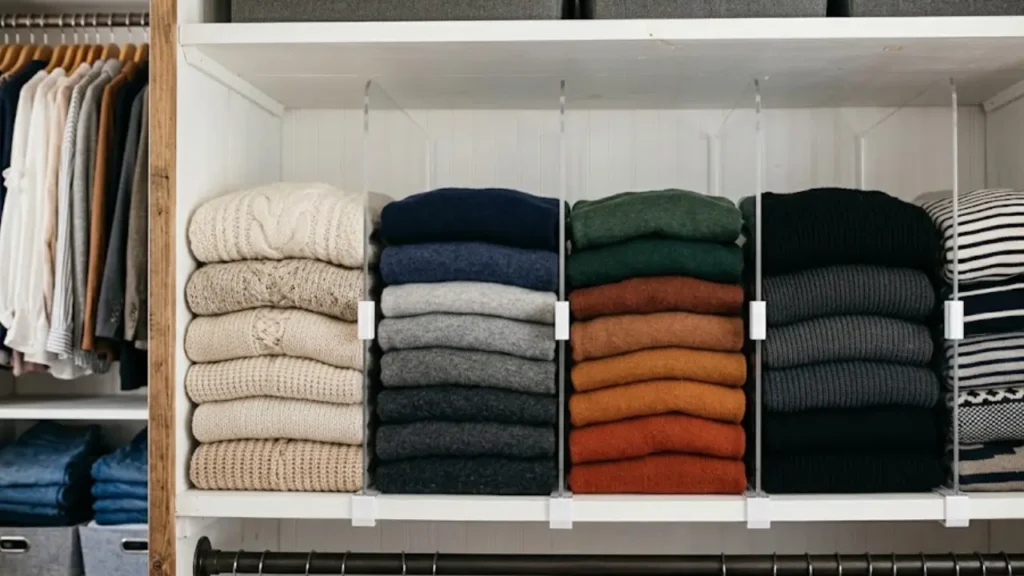
A single wide shelf with a tall stack of folded sweaters or jeans inevitably ends in an avalanche the moment you pull something from the bottom of the pile. Shelf dividers, simple vertical separators that clip or sit onto an existing shelf, break that wide space into individual columns, so each stack stays upright and contained.
This is one of the cheapest organization upgrades available, often just a few dollars per divider, and it solves a problem that otherwise leads to a messy shelf within days of organizing it, regardless of how carefully everything was initially folded and stacked.
4. Use the Back of the Closet Door
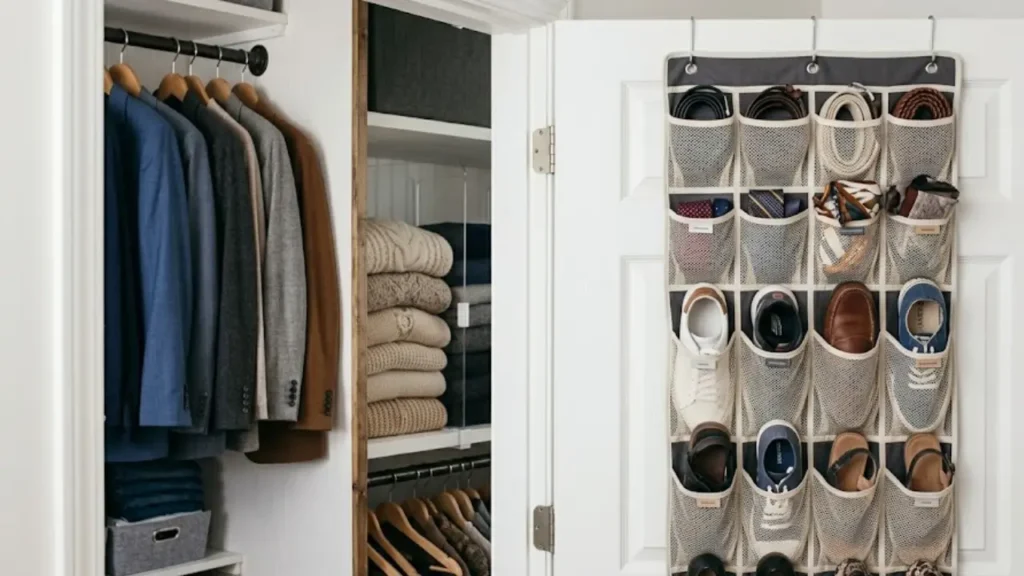
The inside of a closet door is one of the most consistently wasted surfaces in a small bedroom. An over-the-door organizer, whether a simple shoe pocket system or a set of small hooks, adds storage without touching the closet’s actual interior footprint at all.
This space works particularly well for items that need to be grabbed quickly and don’t store well folded or hung: belts, scarves, jewelry, or shoes that you wear often enough that they shouldn’t be buried in a floor bin. Because over-the-door organizers hang from the door itself, they’re entirely removable and rental-friendly, with no installation required beyond hanging the unit on the door.
5. Sort by Frequency of Use, Not Just by Category
Most closet organization advice focuses on grouping by category: all shirts together, all pants together, all dresses together. That’s useful, but it misses a second sorting dimension that matters just as much in a small closet: how often you actually reach for something.
Items worn weekly should occupy the most accessible space, the section of the rod or shelf that’s easiest to reach without bending or stretching. Seasonal items, special occasion clothing, and anything worn only a few times a year can move to a higher shelf, a bin, or even out of the closet entirely during the off-season.
This sorting approach prevents the common small closet problem where everything is crammed in at equal priority, making the things you actually need daily just as hard to find as things you wear twice a year.
6. Rotate Seasonal Items Out of the Closet Entirely
This idea works hand in hand with the frequency sorting above. A small bedroom closet doesn’t have to hold every piece of clothing you own year-round. Heavy winter coats in summer, or lightweight summer clothes in winter, can move to under-bed storage, a closet in another room, or a vacuum-sealed storage bag in a less accessible spot, freeing up meaningful space in the primary closet during the season those items aren’t needed.
If your bedroom is already tight on furniture and floor space, under-bed storage bins are usually the most practical home for rotated seasonal items, since they don’t add any new furniture footprint to the room. For more on working through tight bedroom floor space generally, the guide on small bedroom storage ideas covers under-bed storage options and other solutions specifically suited to rooms where floor space is the limiting factor.
7. Use Slim, Matching Hangers
This sounds like a small cosmetic detail, but it has a real effect on closet capacity. Mismatched hangers, especially thick plastic ones or wire hangers, take up significantly more rod space per item than slim, uniform hangers designed for closet efficiency.
Switching an entire closet to slim velvet or flocked hangers (the kind that grip fabric and keep garments from sliding off) can free up several inches of usable rod space simply through the reduced bulk of each hanger, without removing a single item of clothing. This is a low-cost change, a set of slim hangers is inexpensive, and the capacity gain is often more noticeable than people expect before trying it.
8. Add a Hanging Closet Organizer for Folded Items
A fabric hanging organizer with multiple shelf compartments takes up only the width of a single hanger but provides 6 to 10 individual cubbies for folded items like sweaters, jeans, or t-shirts. This effectively converts hanging rod space into shelf-style storage, without requiring any permanent shelving installation.
This is one of the most rental-friendly small bedroom closet organization ideas available, since it requires zero tools, zero drilling, and can be moved between apartments without any modification needed. It works especially well in closets where the existing shelf space above the rod is limited or already full.
This approach mirrors closet organization systems professionals recommend, since visibility and accessibility matter more long-term than how a closet looks on day one.
9. Use Clear Bins Instead of Opaque Storage
Storage bins are useful in any closet, but the material matters more than people initially think. Opaque bins hide their contents, which means every bin needs a label, and even with labels, finding something specific often means pulling several bins down to check. Clear bins let you see contents at a glance, which speeds up the process of finding what you need and reduces the temptation to just leave things in a pile because digging through bins feels like too much effort.
This matters more in a small closet than a large one, because a small closet has less room for the kind of sprawling, spread-out storage that makes contents easy to see without bins at all. Clear bins essentially restore that visibility in a more compact, stackable format.
10. Install a Closet Light if There Isn’t One Already
This is an easy detail to overlook, but a dark closet is a disorganized closet, because it’s hard to maintain a system you can’t clearly see. Many reach-in closets, especially in older buildings, don’t have a built-in light at all, which means everything at the back or on lower shelves disappears into shadow.
Battery-powered, stick-on LED closet lights solve this without any wiring or electrician needed, and they’re inexpensive enough that cost isn’t really a barrier. Motion-activated versions that turn on automatically when the door opens are worth the small price difference, since they remove the friction of needing to flip a switch every time, which matters for actually maintaining an organization system over time rather than just setting it up once and watching it slide.
11. Use Drawer Organizers Even Without Drawers
If your closet doesn’t have built-in drawers, a small set of fabric or plastic drawer units that fit on the closet floor or a shelf can provide the same organizing function: dedicated, separated compartments for smaller items like socks, underwear, and accessories that don’t work well folded on an open shelf or hung on a rod.
This matters because small items without dedicated storage tend to end up loose on shelves or in the bottom of the closet, which undoes the organization of everything around them. A small drawer unit, even a simple stackable plastic one, gives these items a defined home and keeps the rest of the closet’s organization intact.
12. Match Closet Organization to the Room’s Overall Color Scheme
This idea is less about function and more about how the closet feels when the door is open, which matters more than people expect in a small bedroom where the closet is often visible from the bed or doorway. Storage bins, hangers, and any visible organizational tools in a consistent color palette, rather than a random mix of whatever was available, make the closet feel like an extension of the room rather than a chaotic afterthought.
This pairs naturally with whatever color approach you’ve taken with the rest of the bedroom. If you’ve built a palette around warm neutrals or a specific color family, extending that same logic into visible closet storage (clear bins with neutral labels, hangers in one consistent color) keeps the whole room feeling cohesive even with the closet door open. The broader principles behind building a cohesive small bedroom color palette are covered in small bedroom color ideas, which goes into how color continuity affects a room’s perceived size and calm, a principle that extends naturally into closet organization too.
13. Reassess What Actually Needs to Live in the Bedroom Closet
This last idea is more of a strategic question than a specific product or system, but it’s often the most impactful one. A lot of small bedroom closets are overcrowded not because there isn’t a good system, but because they’re storing items that don’t actually need to be there: linens for other rooms, luggage, holiday decorations, or clothes that haven’t been worn in years.
Before investing in any organization product, it’s worth doing an honest pass through everything currently in the closet and asking whether it belongs there at all. Items that belong elsewhere in the home, or that could be donated rather than stored indefinitely, free up real capacity before any new shelving or bins are even introduced. This step costs nothing and often creates more usable space than any single product on this list.
Once the closet only holds what actually belongs there, the other organization ideas above have a much easier job, since they’re no longer competing with clutter that shouldn’t have been taking up space in the first place. This same principle of being intentional about what belongs in a small room, rather than just accepting clutter as inevitable, extends to the rest of the bedroom too. If you’re working through the room’s overall layout alongside the closet, how to arrange furniture in a small bedroom covers how to keep the closet’s door swing and access path clear as part of the room’s broader furniture arrangement, since a beautifully organized closet doesn’t help much if a dresser is blocking the path to it.
Building a System That Actually Lasts
The difference between a closet that stays organized and one that slides back into chaos within a month usually comes down to whether the system matches how you actually get dressed, not how a magazine photo suggests you should store things.
If you’re someone who grabs the same five outfits on rotation, the most accessible part of the closet should hold exactly those five outfits, not be organized by color or category in a way that looks nice but requires hunting. If you genuinely use seasonal rotation, build that into the system from the start rather than trying to retrofit it later once things are already crammed in.
Start with the two or three ideas from this list that address your specific closet’s biggest problem, too little hanging space, too little floor organization, items with no defined home, rather than trying to implement all 13 at once. A closet organized in stages, each addressing a real problem you’ve actually noticed, tends to last far longer than one overhauled all at once based on ideas that sounded good but didn’t match how the space gets used day to day.
If you’re ready to start, the double rod idea from earlier in this guide is usually the easiest first step, since it doesn’t require any drilling and works in almost any reach-in closet. A simple adjustable closet rod organizer is inexpensive and can be installed in under ten minutes, which makes it a low-risk way to test whether doubling your hanging space solves your closet’s biggest problem before investing in anything else on this list.
FAQ: Small Bedroom Closet Organization Ideas
How do you organize a small bedroom closet?
Start by adding a second hanging rod below the existing one for shorter items like shirts and folded pants, which can roughly double hanging capacity. From there, use shelf dividers to keep stacks from collapsing, sort items by how often you actually wear them rather than just by category, and rotate seasonal items out of the closet entirely when they’re not in use.
How can I maximize space in a small closet without renovating it?
Most capacity gains come from recovering wasted vertical space rather than the closet actually being too small. A second hanging rod, a stackable shelf unit on the floor, an over-the-door organizer, and slim matching hangers can all add meaningful capacity without any permanent changes, which makes them ideal for rentals.
Do double closet rods actually help in a small closet?
Yes, significantly. A standard single rod setup leaves the space below shorter hanging items (shirts, folded pants, skirts) completely unused, often 30 to 40 inches of wasted vertical space. A second rod installed below the first one for shorter items can roughly double the closet’s hanging capacity within the same footprint.
What’s the cheapest way to organize a small bedroom closet?
Shelf dividers, slim matching hangers, and an honest pass through the closet to remove items that don’t actually belong there are all low-cost or free changes that make a noticeable difference. These often create more usable space than any single storage product, simply by stopping the closet from holding things it shouldn’t be storing in the first place.



Pingback: 12 Small Bedroom Decorating Mistakes Quietly Ruining the Room
Pingback: How to Make a Small Apartment Feel Bigger: 18 Proven Ways