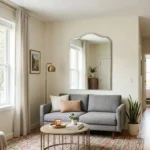
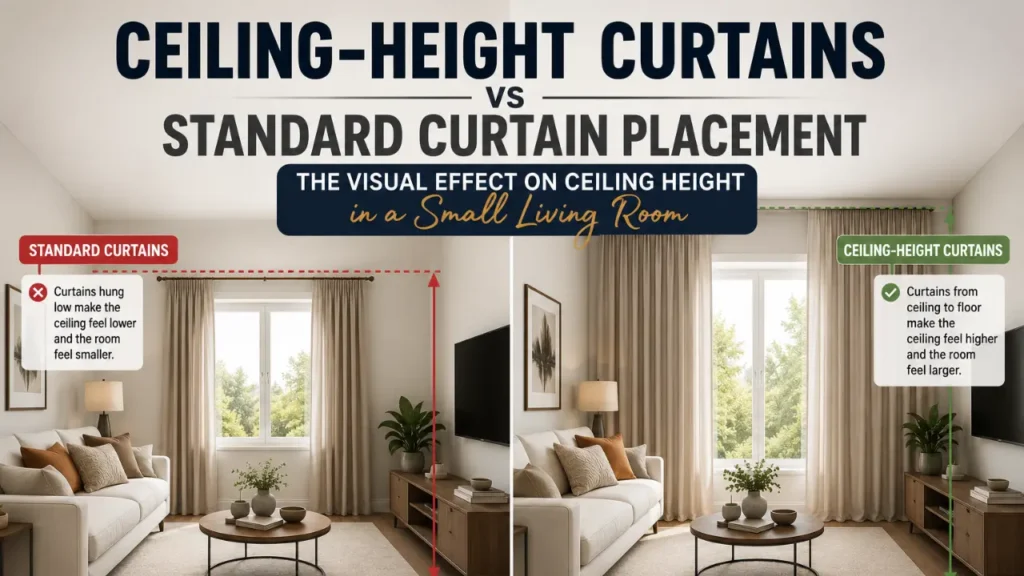

A living room doesn’t look expensive because of how much was spent in it. Some of the most polished, considered living rooms I’ve seen were furnished almost entirely from secondhand shops and budget retailers. And some rooms full of genuinely pricey furniture still look chaotic, cold, or somehow unfinished.
The difference has almost nothing to do with price tags. It comes down to a set of specific styling decisions about proportion, texture, light, and color that make a room read as intentional rather than assembled. Once you understand what those decisions are and why they work, figuring out how to make a small living room look expensive stops being a mystery and becomes a fairly straightforward checklist.
These 13 ideas cover the full range of what actually separates a room that looks considered from one that just looks filled. Some cost nothing. A few cost a little. None require replacing the sofa or the floors.
Why Some Rooms Look Expensive and Others Don’t
The brain processes “expensive” and “cheap” in a room through a handful of consistent signals, most of which have nothing to do with the actual cost of anything.
Proportion is the first. Furniture that’s scaled correctly for the room and for each other reads as curated. Furniture in mismatched scales, a tiny coffee table in front of a large sofa, a massive bookshelf in a small alcove, reads as assembled without thought, which reads as cheap regardless of what any individual piece cost.
Texture is the second. A room with multiple textures, a smooth sofa, a nubby throw, a woven rug, a matte painted wall with glossy artwork, has depth and richness that a room with a single consistent texture (all smooth, all matte, all similar) never achieves. Expensive-looking rooms almost always have layered textures. Budget rooms that feel flat almost always don’t.
Editing is the third. The rooms that feel most expensive tend to have fewer objects in them, not more. Not bare, but edited. Every object that’s there seems to have a reason to be there, which gives each piece more visual weight and importance than it would have in a cluttered room where everything competes equally.
Light is the fourth. Warm, layered lighting at multiple heights makes any room feel more alive and considered. Flat overhead lighting makes even beautiful furniture look institutional.
Thirteen ideas, four underlying principles. That’s really all it takes to understand how to make a small living room look expensive on a budget.
1. Start With One Quality Anchor Piece and Build Around It
This is the opposite of how most people furnish a room, which is usually to buy everything at once within a budget and end up with a matched set that reads as a set, because it is one. Rooms that look expensive almost never have matched sets. They look like they were built over time, with one quality anchor piece that everything else responds to.
In a small living room, that anchor is almost always the sofa. Choosing one sofa that’s genuinely well-made, even if it means living without accent chairs for a while, and then building the rest of the room around it produces a result that looks more intentional than filling the room immediately with a full matched suite. The sofa’s color is part of this decision too. The relationship between sofa color and how it affects the whole room’s feel is covered in detail in this guide to the best couch colors for small living rooms.
2. Layer Three or More Textures in the Textiles
A sofa with a linen throw and a velvet pillow and a woven rug is the same furniture as a sofa with a fleece throw and a polyester pillow and a synthetic rug. The cost difference between those two versions might be modest. The visual difference is dramatic.
Texture layering is one of the highest-return investments in making a small living room look expensive because the brain reads varied textures as richness and quality even when the individual items are inexpensive. The specific combination that works: choose one dominant texture (usually the sofa fabric or the rug), one contrasting texture (something with more or less sheen than the dominant), and one organic texture (a woven basket, a plant, a ceramic vessel with visible surface variation). Three textures in the same general color family creates depth without chaos.
3. Get the Rug Sizing Right Before Anything Else
Rug sizing is the single most consistent indicator of whether a room looks considered or careless. An undersized rug, one that only fits under the coffee table with the sofa and chairs floating around it on bare floor, is one of the fastest ways to make a living room look cheap regardless of what the furniture cost.
The minimum for a rug in a small living room: the front legs of the sofa and all chairs in the seating group should rest on it. The rug defines the conversation area as one intentional zone. Without that, the furniture grouping looks accidental. The specific sizing logic for different room configurations, including how to choose the right size when the room is unusually narrow or when there’s a sectional involved, is covered in this rug sizing guide for small living rooms and this specific breakdown for sectional sofas.
4. Hang Curtains at Ceiling Height, Not Window Height
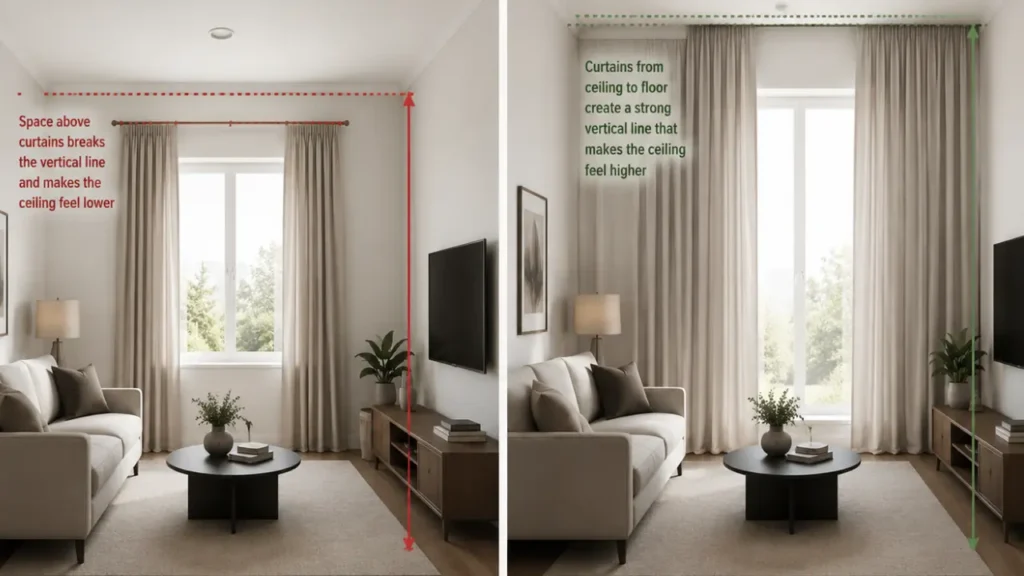
Nothing dates a room or makes it feel more budget-level than curtains hung directly above the window frame at window width. This is the default when people buy curtains without thinking about it, and it makes the ceiling feel lower, the windows feel smaller, and the whole room feel tighter than it needs to.
Mounting the rod as close to the ceiling as possible, and extending it at least 6 inches past each side of the window frame, makes the window look larger, the ceiling look higher, and the room feel more considered. This is true regardless of the curtain fabric or cost. Even inexpensive linen curtains hung at ceiling height look significantly more elevated than expensive drapes hung at standard height.
The curtains should graze the floor or puddle slightly. A gap between the curtain hem and the floor visually shortens the wall and draws attention to the curtain’s bottom edge, which is exactly where you don’t want anyone’s eye to go.
5. Choose a Color Palette and Stay In It
The rooms that read as most polished almost always have a defined color palette, typically two to three main colors that repeat across different surfaces in the room. The wall color appears again in a pillow. The sofa color is echoed in a small object or a throw. The rug picks up a tone from the curtains.
When colors repeat with intention, the eye reads the room as designed rather than accumulated. When colors are chosen one piece at a time without relationship to each other, the room feels busy and disjointed even if every individual piece is nice on its own.
For a small living room specifically, the most consistently successful color approach is a warm neutral base with one or two accent colors. The full range of wall colors that work well in small living rooms, including how different tones affect the sense of space, is in this breakdown of the best wall colors for small living rooms. If the living room is in a rental with limited paint options, this collection of living room color ideas for rental apartments covers how to introduce color through textiles and furniture when the walls can’t change.
6. Use Warm Lamps Instead of Overhead Lighting Alone
Overhead lighting alone produces flat, even illumination that makes a room feel like a retail floor rather than a home. The rooms that feel most expensive and most alive almost always have layered lighting: an overhead source for ambient light, a floor lamp or two for warmth in corners and near seating, and a table lamp for intimacy at eye level.
The bulb temperature matters as much as the fixture itself. Warm white bulbs in the 2700K range produce the golden tone that photographs as expensive and feels immediately more relaxing than the cooler, bluer light that most overhead fixtures default to.
A floor lamp near the sofa and a table lamp on a console or side table give a small living room the kind of layered, warm lighting that makes it feel significantly more considered without changing any furniture or paint.
A warm-toned arc floor lamp with a linen shade is one of the most effective single purchases for making a small living room feel more elevated — it fills a dark corner, adds height, and produces the kind of warm pool of light that overhead fixtures never replicate.
7. Keep the Coffee Table Styled, Not Cluttered
The coffee table is one of the most photographed and most noticed surfaces in a living room, which makes it one of the highest-leverage places to invest styling attention. A coffee table that’s covered in remotes, old magazines, charging cables, and accumulated miscellaneous objects reads as neglected. A styled coffee table reads as a conscious choice.
The approach that works: one tray (which contains and groups objects), one or two books stacked flat, one small plant or organic object like a ceramic vessel or a candle, and nothing else. The tray is the key element because it gives everything inside it a defined boundary, which makes even a few simple objects look intentional.
Coffee table shape matters too, particularly in a small living room where the table’s footprint affects how easy it is to move through the space. A round or oval table improves traffic flow and softens the room visually. The options that work best in different small room configurations are covered in this guide to coffee table shapes for small living rooms.
8. Edit Ruthlessly, Then Edit Again
Expensive-looking rooms have fewer objects in them, not more. This is the editing principle, and it’s the one most people resist because getting rid of things feels like losing. But a room where every surface has something on it, where every corner is filled, where every shelf is packed, reads as cluttered regardless of how nice each individual piece is.
The exercise that works: remove everything from a surface, then add back only what genuinely improves the surface. Not what fits, not what doesn’t have anywhere else to go, but what actually makes the surface better than it would be without it. Most surfaces end up with significantly fewer objects than they started with, and the room immediately reads as more considered.
This same editing discipline, applied specifically to the problem of clutter accumulating in a small living space, is covered in this guide to decorating a small living room without clutter.
9. Style With Odd Numbers and Varying Heights
Objects grouped in odd numbers (three, five, seven) look more natural and visually interesting than even groups, because the eye can’t settle into a symmetrical pattern and finds the grouping more dynamic. This is a small styling principle, but it’s one that professional stylists use consistently because it produces results that feel considered without looking arranged.
Varying the heights within a grouping matters just as much. Three objects at the same height look like a row. Three objects at different heights, one tall, one medium, one low, look like a composition. A tall candle, a medium plant, and a small ceramic dish is more interesting to look at than three candles of the same height, even if the individual pieces are identical in quality.
10. Match or Complement Metals Across the Room
Mismatched metals, chrome hardware next to brass lamp bases next to black picture frames, create visual noise that reads as uncoordinated even when each individual piece is decent quality. Choosing one or two metal finishes and staying within them across all the small hardware and accent elements in the room (lamp bases, picture frames, candle holders, side table legs, hardware on any furniture) creates a thread of cohesion that reads as intentional.
This is the same principle that makes kitchen hardware swaps so impactful. Consistency in the small details reads as attention to quality in a way that individual statement pieces never quite achieve on their own.
11. Introduce One Statement Piece That Anchors the Room
A small living room with all similarly-scaled, similarly-priced pieces can feel pleasant but somewhat forgettable. One piece that’s slightly more interesting than everything else, a vintage lamp with an unusual silhouette, a piece of original art, a mirror with a distinctive frame, a plant in a beautiful ceramic pot, gives the room a focal point that the eye returns to and that makes the space feel curated rather than furnished.
This doesn’t need to be expensive. Secondhand shops consistently have interesting lamps, mirrors, and decorative objects that would cost ten times as much new. The key is that the piece feels like it was chosen, not that it cost a lot.
12. Make Sure the Layout Supports the Room’s Function
A small living room that looks expensive but is uncomfortable to sit in, where the sofa is too far from the coffee table, where there’s no clear place to set a drink, where the conversation area doesn’t feel like a conversation area, doesn’t hold up to the daily reality of living in it. The styling erodes because the room isn’t actually working for how people use it.
Layout is the foundation that every other element builds on. The furniture arrangement mistakes that undermine a small living room’s function and appearance most consistently are covered in this guide to small living room layout mistakes, and the positive version, specific arrangements that work well in different small room shapes, is in this collection of small living room layout ideas. Both are worth reading before moving a single piece of furniture.
13. Think About What the Room Looks Like When You First Walk In
This last idea is less about a specific styling choice and more about a perspective shift that makes the others more effective. The room makes its first impression from the doorway or entry point, and that’s where the most important visual decisions should be concentrated.
If the sofa back is the first thing visible when entering the room, the sofa should look good from behind, which means no lumpy cushions, no trailing cables, no visible damage. If the coffee table is the first surface in sightline, it should be styled rather than covered. If a lamp or a piece of art is visible from the entry, it should be one of the better things in the room.
This first-impression thinking is why the entryway matters so much to how the whole home feels. A well-decorated living room entered through a dark, cluttered hallway never quite recovers from that first impression. The relationship between the entryway and the adjacent living space, and how to make them work together visually, is covered in this guide to decorating a small entryway.
What Ties All of This Together
Looking back at all 13 ideas, the underlying pattern is consistent: rooms that look expensive have fewer, better-chosen things in them, and those things relate to each other through color, texture, scale, and finish in a way that reads as intentional.
None of that requires a large budget. It requires a clear idea of the palette you’re working within, the discipline to edit rather than accumulate, and an understanding of which specific details (rug size, curtain height, lighting temperature, metal finishes) carry the most visual weight in a small living room.
The companion to this approach, applied specifically to small apartments where all these rooms exist together and need to feel cohesive, is in this breakdown of how to make a small apartment feel bigger. The same principles of cohesion, proportion, and editing that make a living room feel expensive work at the whole-apartment level too.
For anyone working in a rental where paint and permanent modifications are limited, these same ideas apply without any of the structural changes. The rental-specific version of making a living space feel considered and personal is in how to make a rental apartment feel like home and decorating a rental apartment on a budget.
FAQ: How to Make a Small Living Room Look Expensive
How do you make a small living room look expensive on a budget?
The highest-impact changes are all about proportion and cohesion rather than expensive purchases: getting the rug large enough for the front legs of all furniture to sit on it, hanging curtains at ceiling height instead of window height, layering three or more textures in the textiles, and choosing a two or three-color palette and staying within it. These changes cost very little but read as intentional in a way that expensive furniture in a poorly proportioned room never does.
What makes a living room look cheap?
Rug sizing is probably the most consistent indicator — an undersized rug makes even expensive furniture look like it was placed randomly. Curtains hung at window height rather than ceiling height are a close second. Beyond those two, a single overhead light source (no lamps), mismatched metals across the room, and cluttered surfaces all contribute to a room reading as cheap regardless of what individual pieces cost.
How do you make a small living room feel luxurious?
Texture layering does more work here than any other element. A smooth sofa fabric against a nubby throw, a woven rug under glossy ceramic objects on the coffee table, a matte wall with a framed piece of art in a reflective frame: varied textures create a sense of richness that a uniform room never achieves. Warm lighting at eye level reinforces this by adding depth and warmth that overhead light flattens out.
Does a gray couch make a room look cheap?
No — the couch color itself isn’t the determining factor. A gray couch in a room with a cohesive palette, properly sized rug, and layered lighting reads as considered. The same gray couch in a room with mismatched textiles, an undersized rug, and flat overhead lighting reads as unresolved. The issue is the surrounding context, not the couch color itself.
How do you style a small living room to look bigger and more expensive at the same time?
These two goals are mostly compatible. The changes that make a room look more expensive, a properly sized rug, curtains hung at ceiling height, a cohesive color palette, edited surfaces, and warm layered lighting, also make a room feel more spacious. The one potential tension is between the “fewer objects” editing principle and the desire for warmth and personality: the resolution is to choose fewer, more interesting objects rather than reducing the room to a bare minimum.